
Mauritius beyond the beach: where to stay, when to go and what most visitors miss
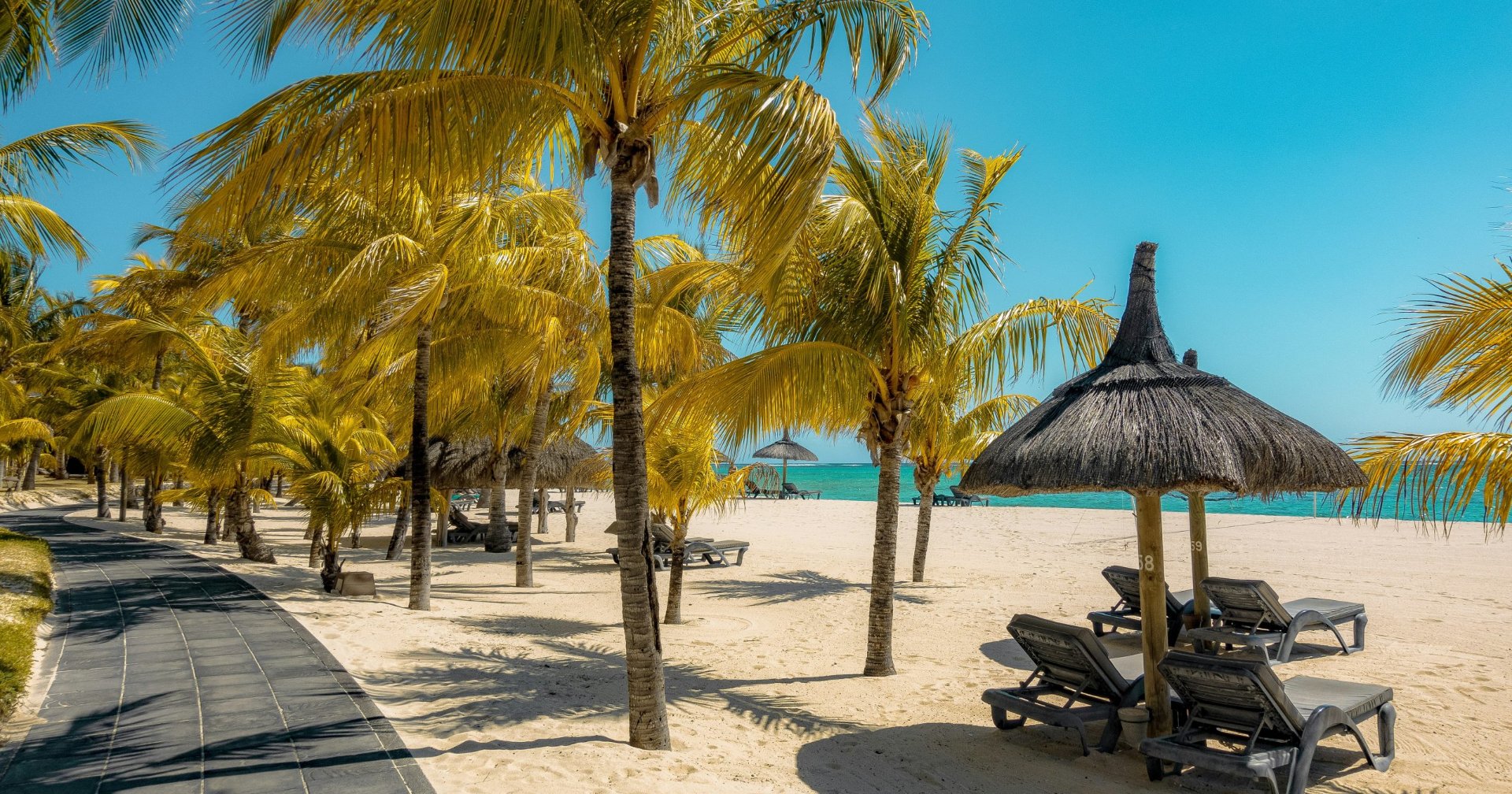
Mauritius has an image problem. Most people picture a honeymoon cliché — white sand, turquoise lagoon, cocktail at sunset. That picture isn't wrong. But it's incomplete in the way that reducing Tokyo to sushi misses the point entirely.
With 150 km of coastline, volcanic peaks above 800 metres, a national park threaded with 50 km of hiking trails, championship golf courses designed by legends of the game, and a cuisine that folds African, Indian, French and Creole traditions into something genuinely its own, Mauritius beyond the beach is a far richer destination than most travellers expect. I've been designing trips here for years, and the feedback I hear most often is the same: "We had no idea there was so much to do."
When to visit Mauritius: a month-by-month breakdown
Mauritius is a year-round destination with a mild tropical climate. But timing matters more than you'd think.
April to June: the sweet spot most people miss
Summer humidity fades, temperatures settle between 24 °C and 29 °C, and the ocean calms down. Visibility underwater improves dramatically. May is widely considered the most balanced month — good weather, fewer tourists, reasonable hotel rates. It's ideal for snorkelling, diving and long coastal walks without the sticky heat.
July and August: wind, whales and kitesurfing
The coolest months on the island. Daytime temperatures hover around 20 °C to 26 °C, and nights can drop below 18 °C in the central highlands around Curepipe. Strong southeast trade winds make the east and south coasts a magnet for kitesurfers — Le Morne's One Eye spot regularly sees 6-metre waves.
Critical detail: humpback whales migrate past the west and north coasts from June to October. July and August offer the most reliable sightings.
September to December: sun, calm seas and shoulder-season value
September marks the transition back to warmth. Winds ease, seas settle, and October is the driest month of the year — excellent for combining beach days with hiking in Black River Gorges National Park.
November and December bring peak-season pricing and tighter availability at top hotels. If you can travel in September or October, you'll get the best of both worlds.
January to March: hot, humid and cyclone-possible
The warmest season, with highs reaching 30 °C, high humidity and heavy afternoon downpours. Direct cyclone hits are rare — roughly every 3 to 5 years — but tropical storms and rough seas are common. February averages 242 mm of rainfall, making it the wettest month.
The upside: rates drop 30–50 % below peak season. But for a first visit, I'd aim for a different window.
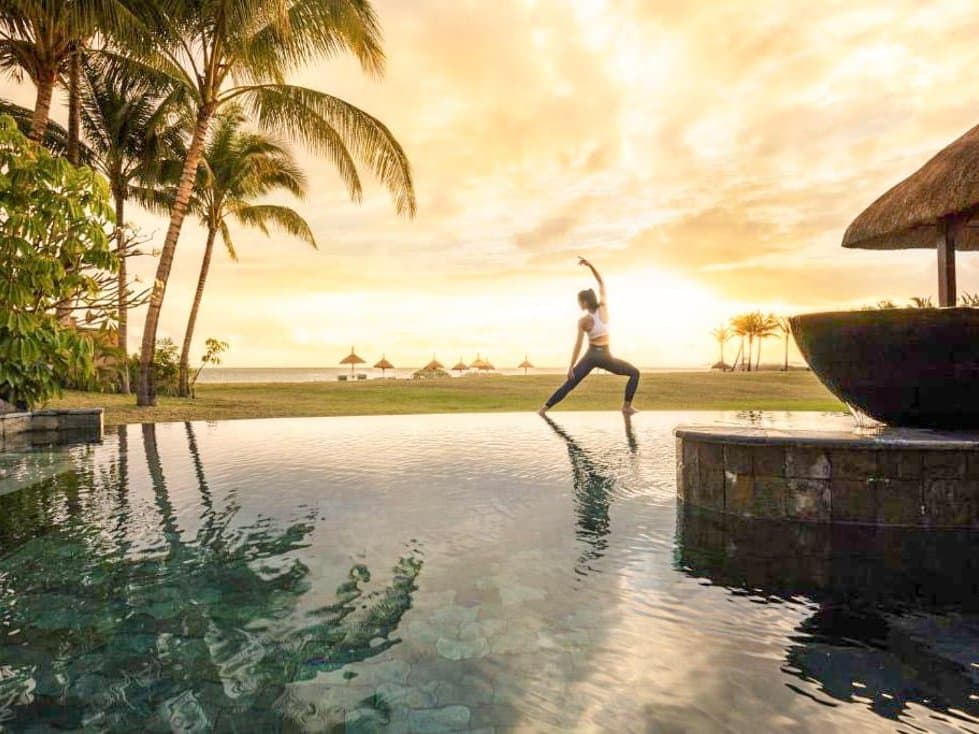
The four coasts of Mauritius: choosing the right one
One of the most common mistakes when planning Mauritius is picking a hotel without understanding the coastlines. The island is small (2,040 km²), but each coast has its own personality.
North: Grand Baie and the social scene
The most developed stretch. Grand Baie and Pereybere offer restaurants, nightlife, catamaran trips to northern islets and a generally lively atmosphere. The beaches are good rather than spectacular, but the infrastructure compensates. Best for travellers who want to combine resort time with eating out.
East: Belle Mare, breeze and the finest resorts
This is where Mauritius concentrates its luxury firepower. Belle Mare has arguably the island's most photogenic beach: kilometres of white sand sheltered by an offshore coral reef. Southeast trade winds blow more consistently here than on the west coast — refreshing, but worth noting if you prefer perfectly still conditions.
Four of the five hotels I recommend below are on this coast. That's no coincidence.
South: cliffs, surf and untamed nature
The south is a different island entirely. At Gris Gris, where there's no protecting reef, the ocean crashes into coastal cliffs with dramatic force. Blue Bay offers a protected marine park with over 50 coral species — ideal for glass-bottom boat trips and snorkelling.
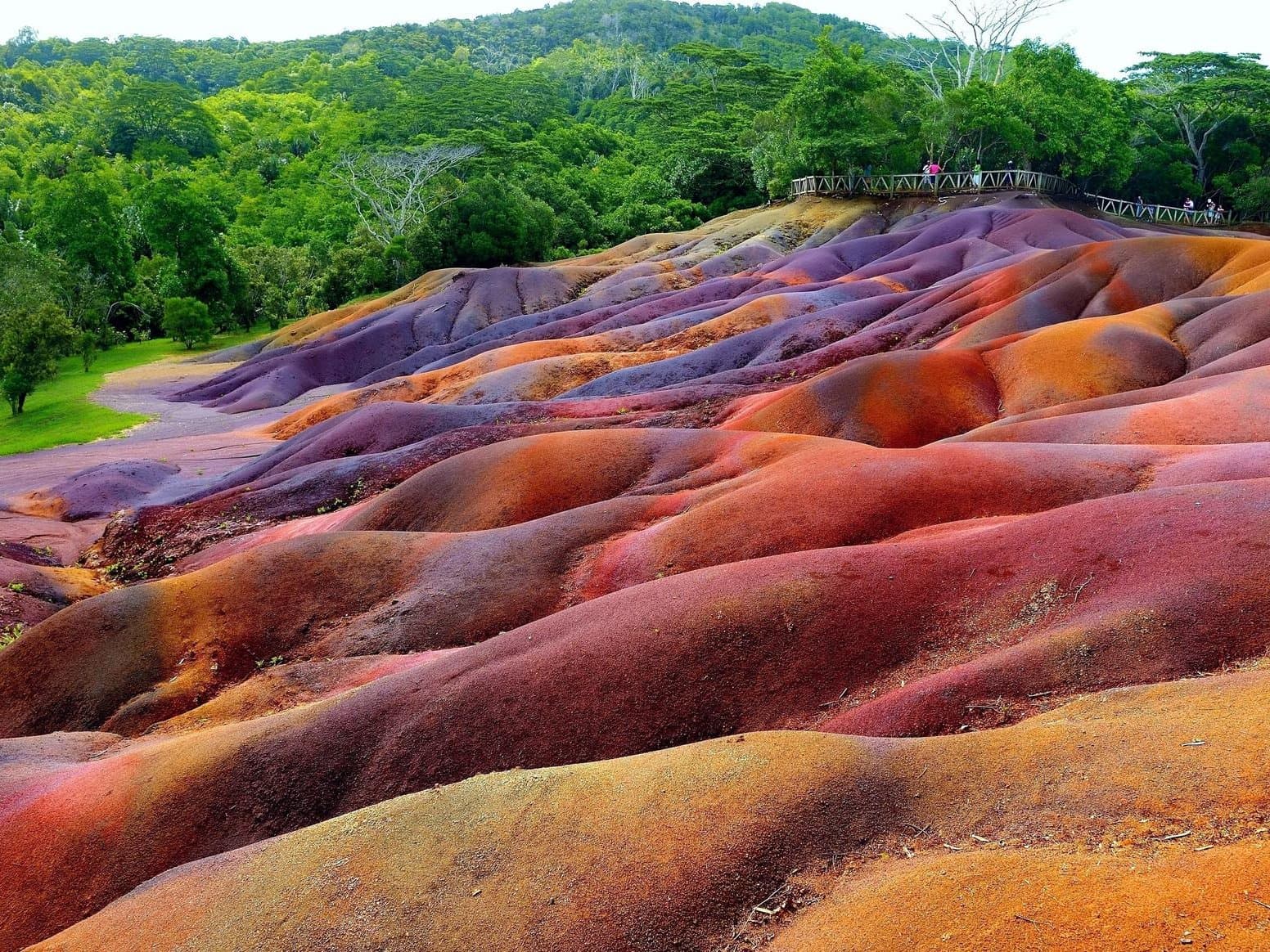
Black River Gorges National Park (6,574 hectares of tropical forest) and the Seven Coloured Earths of Chamarel are both in this region. This is the Mauritius that most resort guests never see.
West: Le Morne, dolphins and the best sunsets
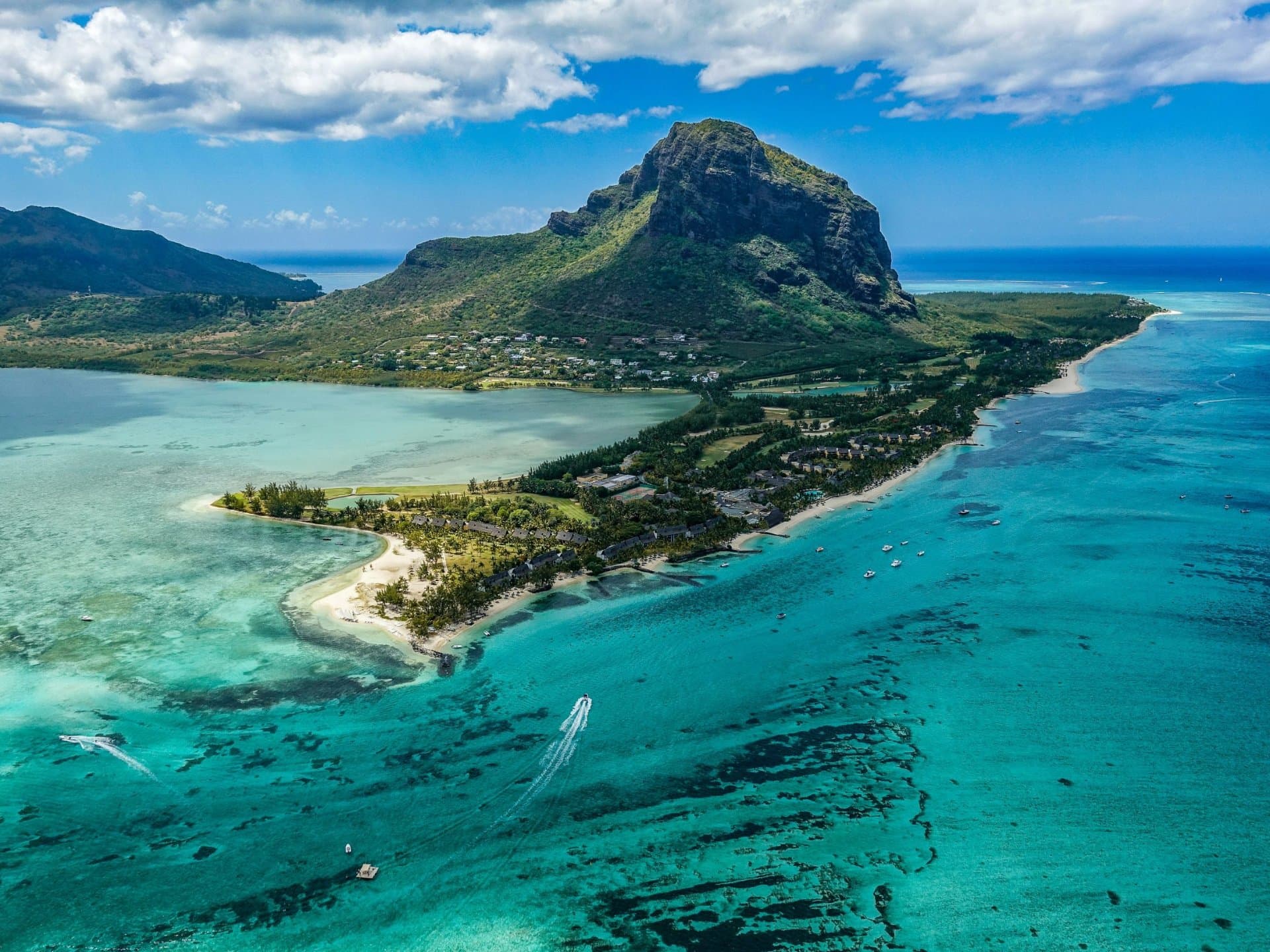
The sunniest, most wind-sheltered coast. Flic en Flac is the main access point; Le Morne, at the southwest tip, pairs a basaltic mountain designated a UNESCO World Heritage Site with the island's best kitesurfing beach.
From Tamarin Bay, speedboats head out for wild dolphin encounters — one of Mauritius' most popular activities. The west coast sunsets are, without exaggeration, among the finest in the Indian Ocean.
Where to stay: five hotels for five traveller profiles
I'm not going to list twenty hotels. Here are five, each with a distinct profile, all vetted through the operator network I work with.
One&Only Le Saint Géran: the icon, reinvented
Location: private peninsula at Belle Mare, east coast. Best for: couples, honeymooners, families who want the highest standard.
Le Saint Géran has been the benchmark name in Mauritius for decades, and after its renovation it continues to earn that status. It occupies an entire private peninsula — a rarity on an increasingly built-up island. The beach wrapping around it is, according to nearly every review you'll find, among the most beautiful guests have ever seen.
Six restaurants, including Tapasake (Japanese fusion with lagoon views) and La Pointe (seafood over coconut embers, beach-club energy). The spa partners with Biologique Recherche. KidsOnly (ages 4–11) and a dedicated teen programme make it viable for families, though the overall atmosphere leans towards couples.
What sets it apart: the feeling of seclusion. The private peninsula creates an enclosure that neighbouring resorts simply can't match.
Four Seasons at Anahita: villas, golf and a private beach on Île aux Cerfs
Location: Anahita nature reserve, east coast. Best for: families, golfers, couples who value space and privacy.
The Four Seasons Anahita is a 133-villa resort where every unit has its own private pool and garden. The architecture blends teak, local volcanic stone and open-plan design that dissolves the boundary between indoors and out. It's the most spacious resort in Mauritius, and that sense of room is palpable from the moment you arrive.
The headline feature: exclusive access to a private beach on Île aux Cerfs, the island's most famous islet, but without the day-tripper crowds on the public side. Hotel boats run the crossing daily.
Seven restaurants, an overwater spa set among mangrove islets and two golf courses — including the Ernie Els-designed 18-hole championship course (7,580 yards, par 72), with six oceanfront holes and a final approach widely considered one of the most spectacular in the world. Green fees are complimentary for guests.
The Hobbit Village Kids Club (ages 4–9) has its own bakery where children bake dodo-shaped biscuits. The teen club Karokan features a DJ booth.
Constance Belle Mare Plage: the all-rounder
Location: Belle Mare, east coast. 2 km of private beach. Best for: families, golfers, food lovers, couples — it works for almost everyone.
If I had to recommend a single hotel in Mauritius for a first-time visitor, this would likely be it. Constance Belle Mare Plage combines scale (278 rooms and villas, eight restaurants, six bars) with a service standard that surprises for a resort of its size.
Two 18-hole championship golf courses — Legend and Links — with complimentary green fees for guests. The Blue Penny Cellar houses over 35,000 bottles and 2,500 labels, operating as one of the most serious wine programmes in the Indian Ocean. Four swimming pools, one heated during winter months.
The Constance Festival Culinaire, now in its 19th edition (March 2026), brings international guest chefs to cook across the resort's restaurants. A genuine event worth timing a trip around.
Constance Prince Maurice: the boutique with a film-star pedigree
Location: between the east coast and a nature reserve, a few kilometres from Belle Mare Plage. Best for: couples, honeymooners, adults seeking intimacy and design.
If Belle Mare Plage is the extroverted sibling, Prince Maurice is the introverted one with better taste. Smaller, more intimate, with an aesthetic that plays between tropical and contemporary. Film trivia: much of the Netflix movie "Resort to Love" was filmed here, and watching it makes clear why they chose it — the architecture, the lagoon views and the mangrove setting are genuinely photogenic.
The hotel's floating restaurant on stilts is one of the most distinctive dining spaces in Mauritius. Fewer options than Belle Mare Plage, but more concentrated and more carefully curated.
For couples without children who prioritise atmosphere over sports infrastructure, Prince Maurice deserves first consideration.
The Residence: colonial elegance at a sharper price point
Location: Belle Mare, east coast. Best for: couples, discreet families, travellers who value service over spectacle.
The Residence occupies an interesting niche: a five-star hotel with colonial architecture inspired by Mauritian plantation houses — wooden shutters, white-and-beige palette, marble bathrooms — but at a price noticeably lower than its Belle Mare neighbours.
135 rooms and 28 suites, all with butler service. A detail that defines the hotel's character: every evening, rooms are scented with ylang-ylang, the island's emblematic flower. Two restaurants, three tennis courts, an extensive spa and the same exceptional east-coast beach.
For travellers who want luxury without mega-resort scale, The Residence is one of the best value propositions in Mauritius.
Golf in Mauritius: Indian Ocean courses worth travelling for
Mauritius has quietly positioned itself as one of the southern hemisphere's most compelling golf destinations. The combination of near year-round playable weather, volcanic landscapes and courses designed by professional-circuit legends makes it a serious proposition for travelling golfers.
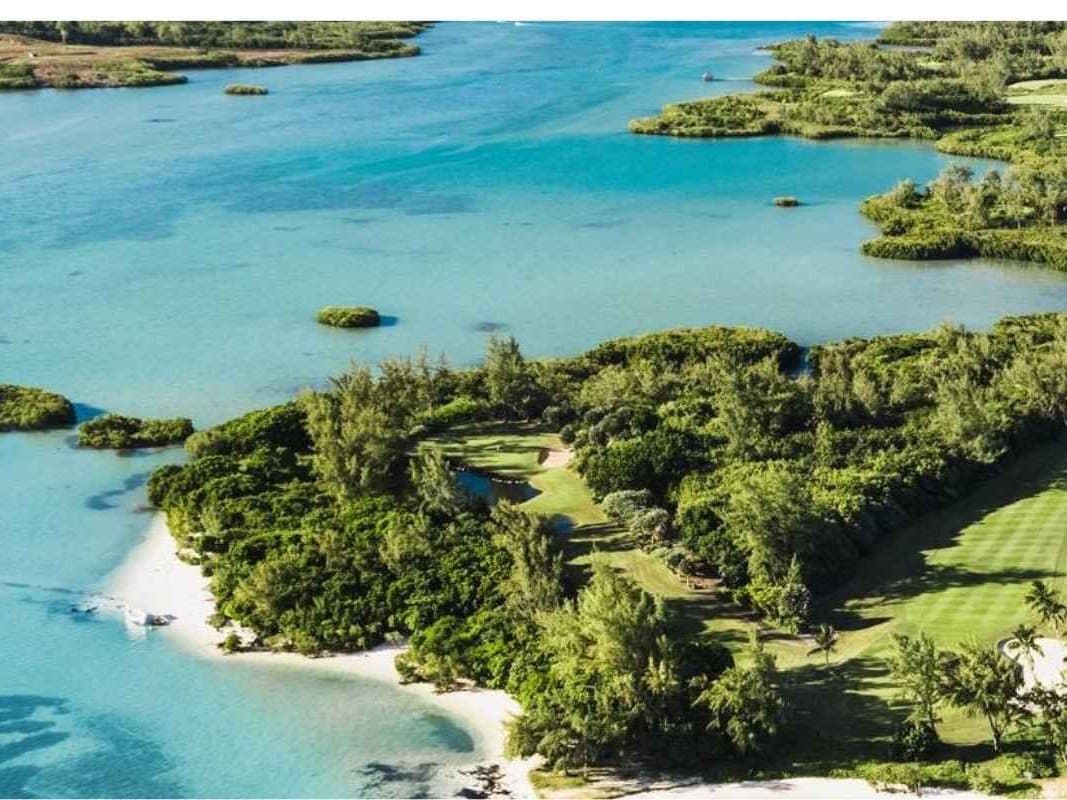
The Ernie Els course at Four Seasons Anahita is the flagship: 18 holes, par 72, 7,580 yards. Six oceanfront holes and a layout that works with the natural contours of the Anahita reserve rather than fighting them. The Île aux Cerfs Golf Club, also managed by Four Seasons, adds the novelty of playing on an island accessible only by boat — hard to find a more picturesque setting anywhere.
At Constance Belle Mare Plage, the twin courses — Legend (the longer, more technical test) and Links (Scottish-style, exposed to the wind) — offer complimentary green fees to hotel guests. The resort hosts the MCB Ladies Classic annually, which speaks to the competitive standard.
For golfers who want to combine serious play with a beach holiday, Mauritius has few equals in the Indian Ocean.
What to do in Mauritius beyond the beach
The island measures just 65 km north to south and 45 km east to west. You can cross it in just over an hour, which means leaving the resort is easy and genuinely worthwhile.
Black River Gorges National Park: 6,574 hectares, over 50 km of trails, habitat of the endangered pink pigeon. The trail to Piton de la Petite Rivière Noire (828 m, the island's highest point) takes 3–4 hours and includes a final section with ropes. Not a casual stroll.
Seven Coloured Earths of Chamarel: a geological formation of dunes in seven distinct tones, the result of volcanic erosion. Open 8:30 to 17:30. Pairs well with a stop at the Rhumerie de Chamarel, an artisan distillery a few kilometres away.
Port Louis: the capital has the Caudan Waterfront for restaurants and shops, and a central market where you can try Mauritian street food — dholl puri, gâteaux piment, alouda. The best place to understand the island's cultural blend.
Creole cooking with Marie Michelle: a culinary experience in a rural home, learning to prepare chicken rougaille, venison curry and parathas. About as authentic as it gets.
Mauritius for families: why it works so well
After East Africa, Mauritius is the destination I recommend most to families with children between ages 3 and 14. The reasons are practical.
Lagoons sheltered by coral reef create safe swimming zones with minimal waves and no strong currents. All five hotels listed above have supervised children's clubs with age-specific programmes. The flight from Europe connects comfortably via Paris, Dubai or Istanbul, and the time difference is only +2 to +4 hours depending on your origin — far more manageable than the Caribbean or Southeast Asia.
Mauritius also offers wildlife encounters — giant tortoises, dolphins, tropical reef fish — that work as an alternative to a safari for families not ready for (or not interested in) mainland Africa.
Practical details before you fly
Flights from Europe: no direct flights from most European cities. Common connections route via Paris (Air France/Air Mauritius, ~12–13 h total), Dubai (Emirates, ~14 h) or Istanbul (Turkish Airlines, ~13 h).
Visa: EU citizens do not need a visa for stays up to 90 days. Passport must be valid for at least 6 months from arrival.
Currency: Mauritian rupee (MUR). Euros, pounds and dollars are easily exchanged at the airport and hotels.
Tourist tax: since October 2025, Mauritius applies a €3 per person per night tax at hotels. Children under 12 are exempt. Paid directly at the hotel.
Driving: left-hand traffic (British legacy). Roads are narrow but traffic is manageable. Renting a car is the best way to explore the island independently.
Time zone: GMT+4 year-round (no daylight saving). That's +3 hours from the UK in summer, +4 in winter.
Mauritius rewards the traveller who gives it at least 7–8 nights and ventures beyond the hotel gates. And if you pair it with a safari in Kenya, Tanzania or Botswana, you've arguably assembled the most complete trip in the southern hemisphere.