
Islas Secas, Panamá: el archipiélago privado que el viajero español aún no conoce
A veinte millas de la costa del Pacífico panameño, catorce islas volcánicas emergen del Golfo de Chiriquí sin hacer ruido. Trece de ellas permanecen intactas. En la decimocuarta, un resort de baja densidad recibe a un máximo de 32 huéspedes. Esto es Islas Secas, Panamá — y probablemente sea el destino de lujo más interesante de Centroamérica que la mayoría de viajeros españoles no tiene en el radar.
No hablo de un resort de playa convencional con pulsera y buffet. Islas Secas es un archipiélago privado donde la conservación marina dicta las reglas, donde se llega en avioneta, donde el buceo compite con los mejores puntos del Pacífico Tropical Oriental, y donde las ballenas jorobadas pasan cada año a criar frente a la terraza del restaurante. Quien busque un todo incluido previsible, mejor que mire en otra dirección.
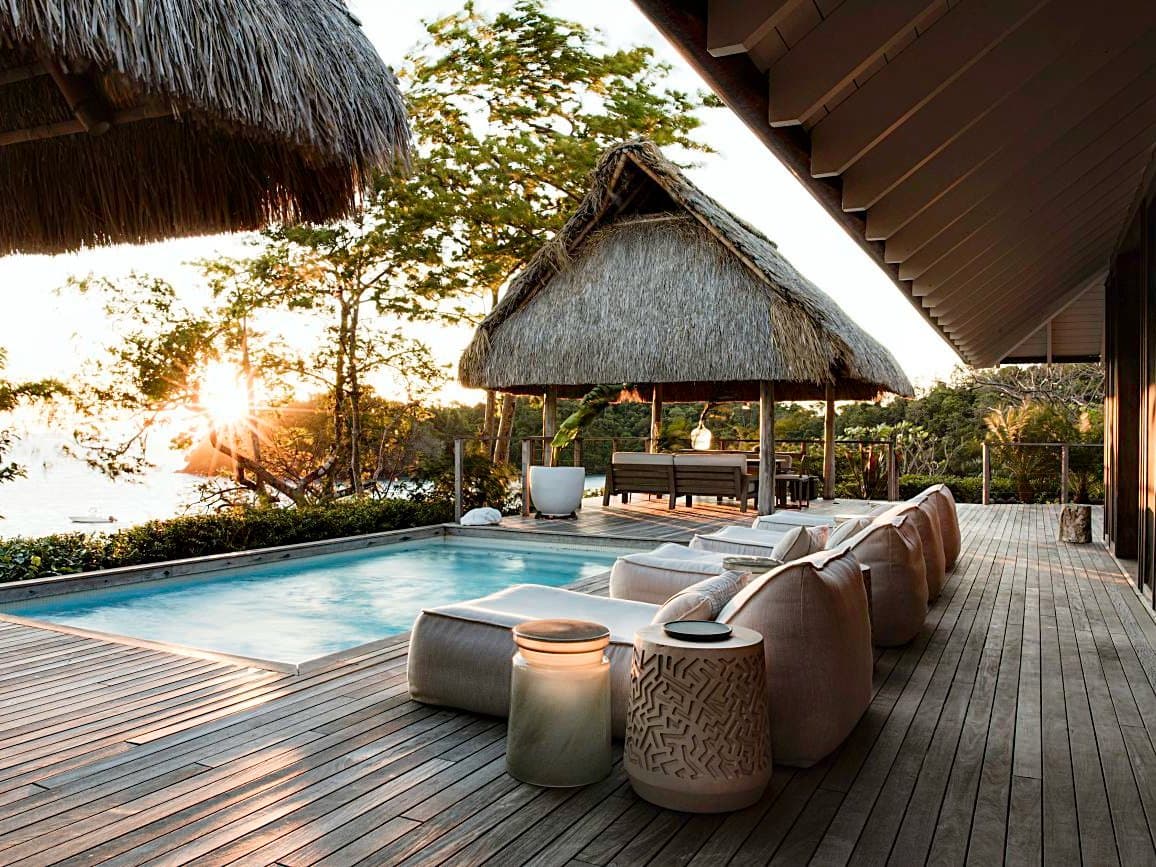
Qué es Islas Secas y por qué debería importarte
Islas Secas es una reserva archipelágica privada en el Golfo de Chiriquí, la franja costera del Pacífico panameño que se extiende entre la frontera costarricense y la Península de Azuero. El archipiélago alberga 750 especies de peces, más de 124 especies de aves y 128 especies de plantas, situándose en una de las zonas de mayor biodiversidad marina del planeta.
El resort opera con un modelo radicalmente distinto al de la hotelería convencional del Caribe o el Índico. La propiedad funciona con energía 100% solar, composta todos sus residuos orgánicos y reutiliza el 100% de sus aguas residuales para riego. Compensa además el combustible de su avioneta y sus embarcaciones a través de un programa de carbono. No es greenwashing de catálogo: es una operación que lleva la sostenibilidad integrada en su infraestructura.
Condé Nast Traveler lo ha votado como el resort número uno de Centroamérica. Pero más allá de los premios, lo que lo define es su carácter: esto no es un lugar para tumbarse cinco días junto a una piscina. Es un destino para gente curiosa que quiere estar en el agua, en la selva, en un barco — y volver por la noche a una casita diseñada con una inteligencia arquitectónica que merece la pena ver.
Cómo llegar al archipiélago desde España
No es complicado, pero requiere planificación. El acceso tiene una logística particular que conviene entender antes de reservar.
El vuelo en Twin Otter desde Ciudad de Panamá
Desde España, el vuelo a Ciudad de Panamá (Tocumen, PTY) conecta directo desde Madrid con Iberia, o vía hubs como Miami, Bogotá o Ciudad de México. Una vez en Panamá, los huéspedes embarcan en el Twin Otter privado de Islas Secas para un vuelo de aproximadamente una hora hasta la pista de aterrizaje del archipiélago.
La tarifa del vuelo incluye servicio VIP en el aeropuerto de Tocumen, trámites acelerados de inmigración y aduanas, y todos los traslados terrestres en Ciudad de Panamá si fuera necesario.
Tarifas Twin Otter 2026 (por persona y trayecto):
- 1-2 huéspedes: $1.300
- 3-6 huéspedes: $1.000
- 7-10 huéspedes: $850
- 11+ huéspedes: $750
La tarifa se calcula por el número de personas que viajan bajo la misma reserva, lo cual incentiva viajar en grupo.
Frecuencias y logística de traslado
Los vuelos programados operan 3 a 4 veces por semana, con variación estacional:
- Noviembre a abril: lunes, miércoles, viernes y domingo
- Mayo a septiembre: martes, jueves y domingo
La salida desde Ciudad de Panamá es entre las 12:00 y las 15:00. El regreso desde Islas Secas, entre las 8:00 y las 10:00. Esto condiciona la duración de la estancia: las noches deben coincidir con los días de vuelo disponibles. Islas Secas recomienda un mínimo de cinco noches para aprovechar realmente el destino, y es un consejo que comparto. Con menos tiempo, la logística de traslado pesa demasiado sobre la experiencia.
Los vuelos chárter fuera de horario están sujetos a disponibilidad.
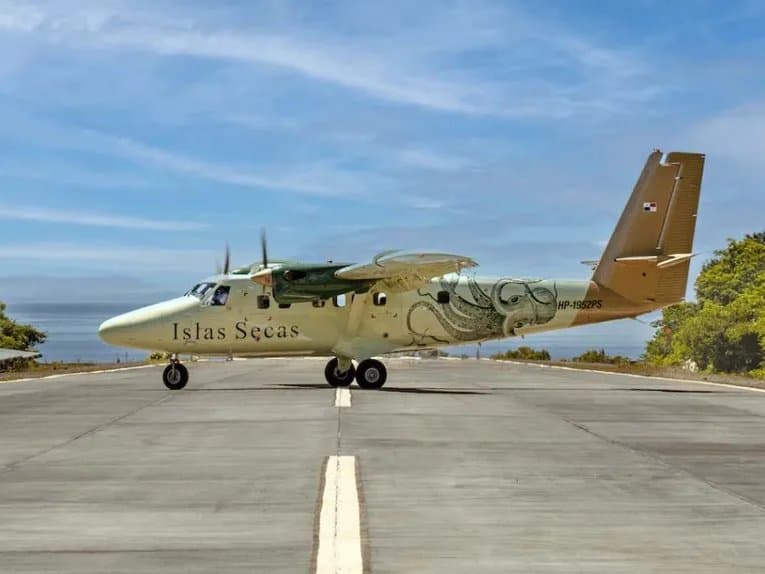
Dónde alojarse: de las Tented Casitas a Casa Cavada
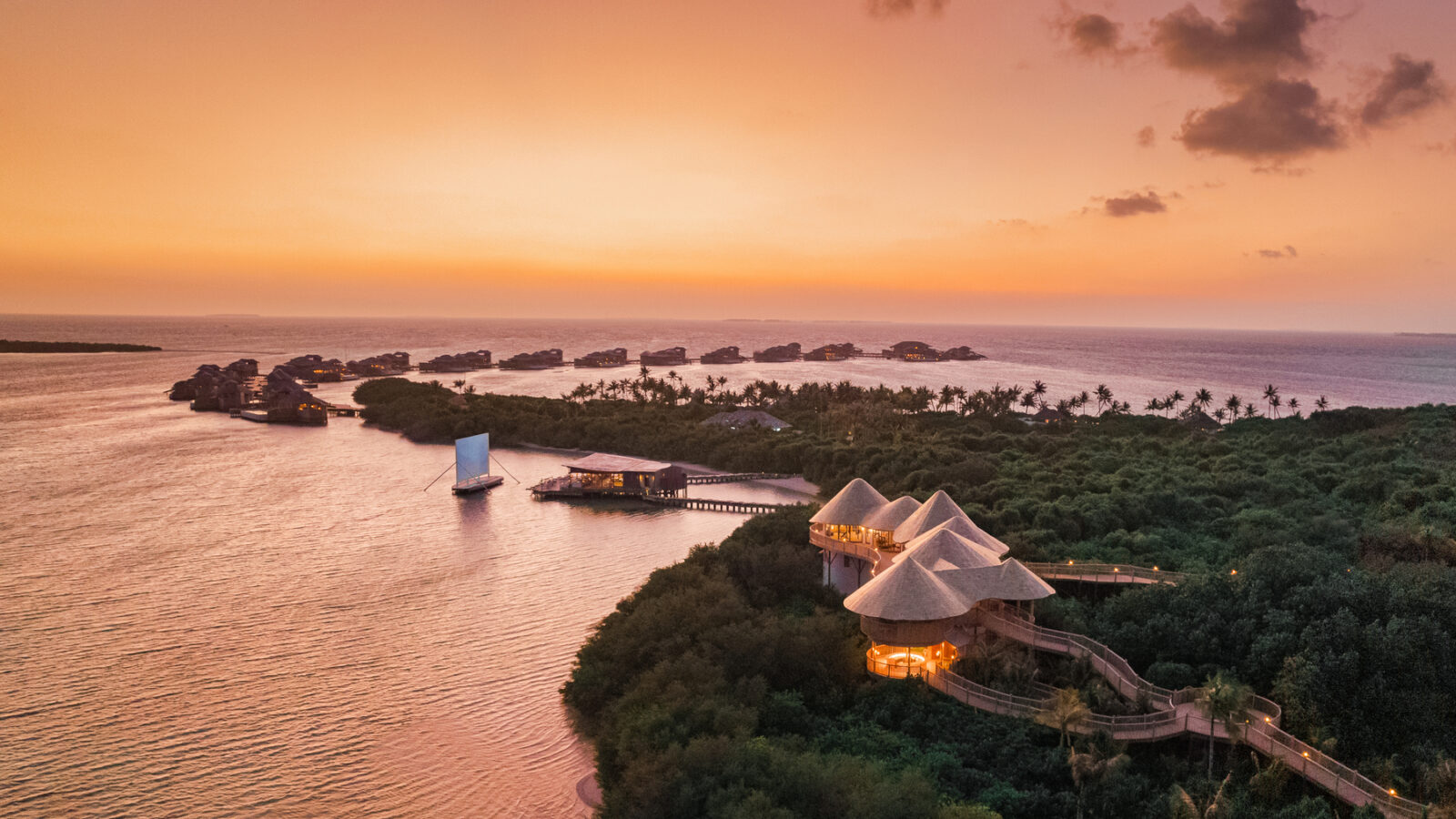
La oferta de alojamiento en Islas Secas es reducida por diseño. Siete unidades de casitas más una casa privada, repartidas por la isla principal (Isla Cavada) con distancia suficiente entre ellas para que cada huésped sienta que tiene su propio rincón del archipiélago.
Tented Casitas — para los que quieren dormir con la selva
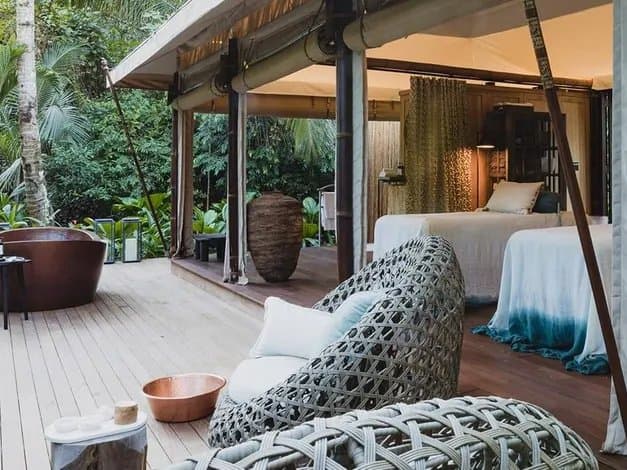
Tres Tented Casitas de una habitación, ubicadas en lo alto de las colinas. Sus paredes enrollables abren completamente la estancia a la vegetación tropical y al mar. Incluyen terraza amplia, tumbonas y bañera exterior. No tienen piscina privada, pero la piscina principal del resort está disponible en cualquier momento.
Son la opción más aventurera: llegar a ellas implica caminar por una pendiente a través de la vegetación. Si eso suena incómodo, probablemente no es la opción adecuada. Si suena bien, es la más inmersiva del resort.
Casitas — el refugio privado con piscina
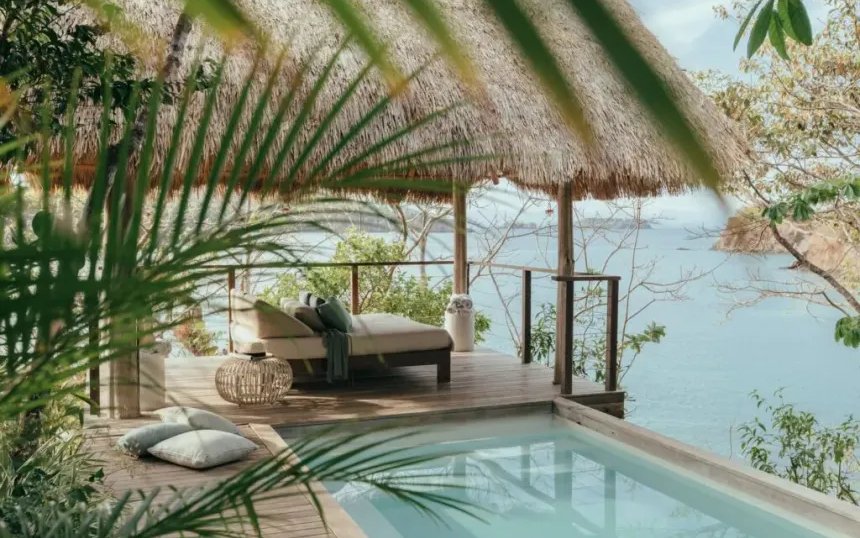
Cuatro Casitas de diseño inspirado en la arquitectura tradicional panameña, con techos altos, ventanales generosos y persianas de madera. Van desde Casita Mirador (una habitación) hasta Casita Grande (cuatro habitaciones, ideal para familias o grupos). Todas tienen piscina privada, terrazas amplias y vistas al océano.
- Casita Mirador: 1 habitación + piscina de inmersión
- Casita Tres Palmas y Casita Sombras: 2 habitaciones cada una + piscinas de inmersión
- Casita Grande: 4 habitaciones + gran piscina de inmersión
Casa Cavada — 770 m² sobre un acantilado
La incorporación más reciente y la propiedad más espectacular. Casa Cavada es una residencia privada de 770 m² (8.300 pies cuadrados) con 4 dormitorios, 6 baños, sala de estar, cocina, comedor, gimnasio, bar y una piscina infinita semiolímpica. Se alquila completa, con chef y bartender exclusivos.
Ubicada en lo alto de los acantilados, bajo un techo ondulante sostenido por pilares de eucalipto, es probablemente una de las residencias privadas más impresionantes de Centroamérica. Para un grupo multigeneracional o un viaje entre amigos con presupuesto, es difícil encontrar algo comparable en esta parte del mundo.
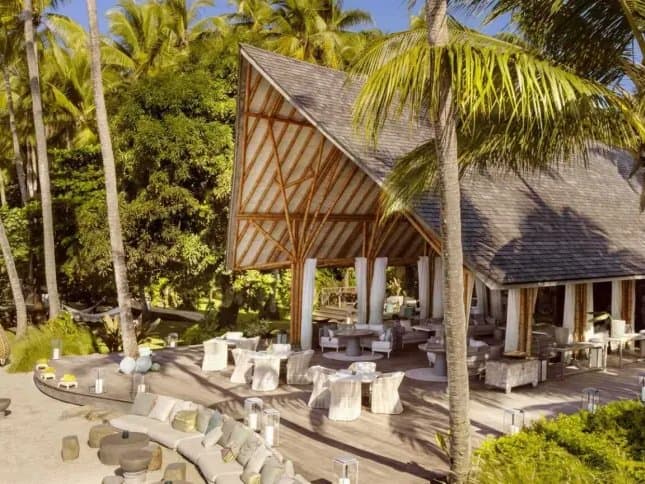
Qué hacer en Islas Secas (más allá de la playa)
La oferta de actividades es lo que realmente separa a Islas Secas de otros destinos insulares de lujo. Esto no es un lugar donde el mar es solo decorado — aquí es el eje central de la experiencia.
Safari marino y buceo en el Golfo de Chiriquí
El Golfo de Chiriquí contiene uno de los ecosistemas marinos más ricos y menos explorados del Pacífico. El resort ofrece snorkel guiado, buceo en más de 20 puntos (incluyendo opciones de iniciación y certificación), kayak, paddleboarding, e-foiling, catamarán y una excursión de pesca de medio día incluida en la tarifa.
Lo que hace excepcional el buceo aquí no es la visibilidad cristalina (que varía según temporada — la mejor claridad es de diciembre a marzo), sino la densidad de vida marina: arrecifes de coral costeros, mantarrayas, delfines, y una variedad de especies pelágicas que circulan por el corredor marino que conecta con las Galápagos.
Un dato importante: no se permite bucear el día de llegada ni el día anterior a la salida. Otra razón más para planificar estancias de cinco noches o más.
Ballenas jorobadas: cuándo y cómo verlas
Islas Secas se encuentra en la ruta migratoria de las ballenas jorobadas que viajan desde la Antártida para reproducirse en aguas tropicales. La temporada principal va de julio a octubre, cuando el resort ofrece excursiones guiadas de avistamiento incluidas en la tarifa.
Existe una segunda temporada, más breve, de diciembre a abril, cuando llega una población menor procedente del hemisferio norte. Fuera de estas ventanas, las experiencias marinas y de naturaleza siguen disponibles todo el año.
Parque Nacional Coiba: a una hora en barco
A poco más de una hora de navegación, el Parque Nacional Coiba es Patrimonio de la Humanidad de la UNESCO desde 2005. Es la isla más grande de Centroamérica, con más de 500 km² de selva tropical prácticamente virgen, y su entorno marino protege uno de los sistemas de arrecifes de coral más extensos del Pacífico Tropical Oriental.
Las excursiones a Coiba incluyen buceo, senderismo por selva primaria y la posibilidad de avistar tiburones ballena, mantarrayas gigantes, tortugas carey y tiburones martillo. Estas excursiones son complementarias al paquete todo incluido (tienen coste adicional), pero son de lo mejor que se puede hacer en el Pacífico panameño.
En tierra: senderos, aves y ciencia ciudadana
La isla principal cuenta con kilómetros de senderos acondicionados para observar flora y fauna tropicales. Con más de 124 especies de aves — incluyendo la segunda colonia más grande de fragatas de Panamá — el birding es un atractivo serio aquí, no un relleno de actividades.
El resort opera como estación de monitoreo a largo plazo, recopilando datos sobre el entorno marino para guiar medidas de conservación. Los huéspedes pueden participar en proyectos de ciencia ciudadana, lo que añade una dimensión educativa especialmente valiosa para familias con niños mayores.
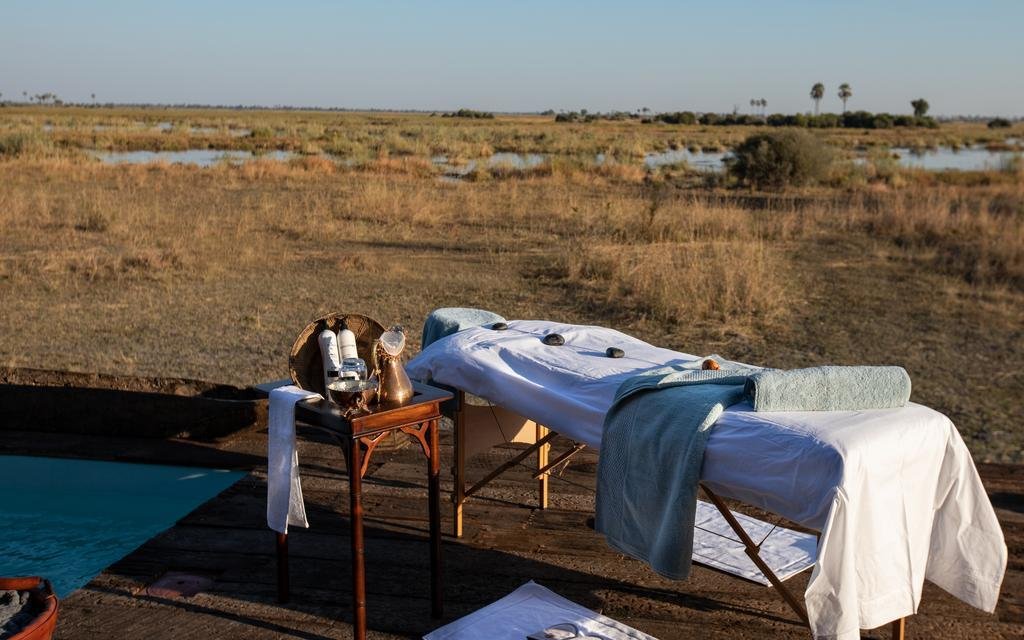
Otras opciones: yoga diario en espacios al aire libre, spa con tratamientos elaborados con ingredientes locales (coco, jazmín, ylang ylang), y clases de cocina y coctelería.
Para quién es (y para quién no) este destino
Islas Secas funciona bien para:
- Parejas aventureras que quieren más que playa y spa — que buscan bucear, navegar, explorar.
- Familias con niños mayores (el programa de Jóvenes Exploradores incluye naturalismo, snorkel y cocina para niños). Los más pequeños también tienen actividades, pero el entorno no es un kids club convencional.
- Grupos multigeneracionales que quieran alquilar Casa Cavada o varias casitas y tener el archipiélago prácticamente para ellos.
- Viajeros que valoran la sostenibilidad real, no la de folleto.
No es para:
- Quien busque un resort de playa con entretenimiento nocturno, tiendas o bullicio.
- Quien no se sienta cómodo con caminos de tierra, pendientes y un entorno donde la naturaleza manda. Esto no es las Maldivas — es más raw, más honesto.
- Quien quiera estancias cortas de 2-3 noches. La logística de acceso no lo justifica.
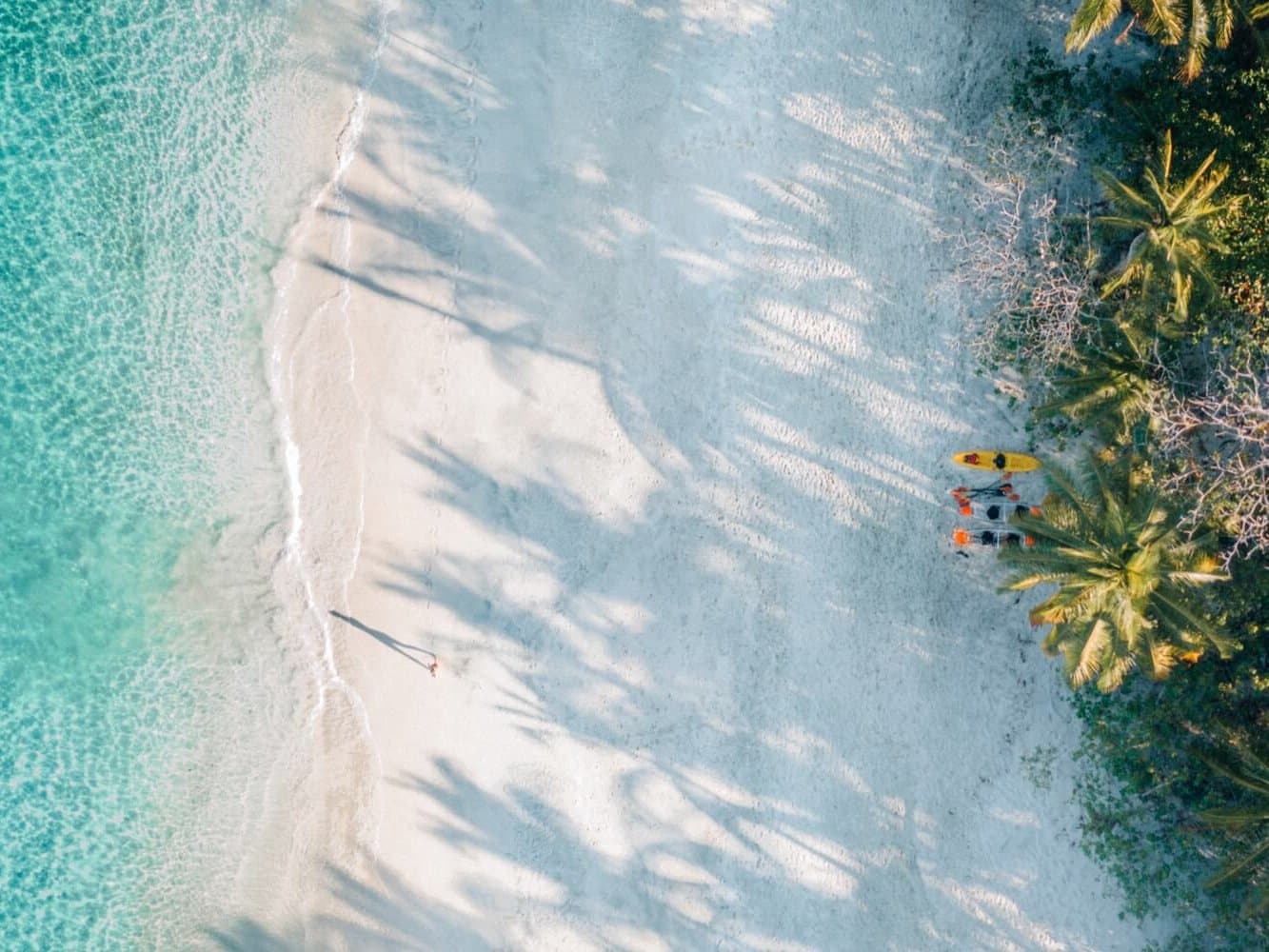
Cuándo ir: temporadas y clima en el Golfo de Chiriquí
El Golfo de Chiriquí tiene un clima tropical con dos estaciones marcadas:
- Temporada seca (diciembre a abril): menos lluvia, mejor visibilidad para buceo, temperaturas entre 27-32°C. Es la época más demandada.
- Temporada verde (mayo a noviembre): más precipitaciones (típicamente por la tarde), vegetación más exuberante, y la temporada de ballenas jorobadas (julio-octubre). Menos huéspedes, lo que para algunos es una ventaja.
La temperatura del agua ronda los 26-29°C durante todo el año, lo cual hace que el snorkel y buceo sean confortables sin traje grueso.
Lo que incluye la tarifa todo incluido
Islas Secas opera con un modelo todo incluido que cubre más de lo habitual:
- Todas las comidas y bebidas: desayuno, almuerzo y cena preparados al momento, picnics en playa, cócteles, vino, cerveza y espumosos
- Itinerario personalizado diseñado por un experto en la isla según los intereses del grupo
- Actividades acuáticas: kayak, paddleboarding, e-foiling, vela, snorkel guiado dentro del archipiélago
- Una excursión de pesca de medio día dentro del archipiélago por estancia
- Un tratamiento de spa de 60 minutos por huésped adulto
- Yoga diario en distintos espacios al aire libre
- Avistamiento de ballenas en temporada (julio-septiembre)
- Guías de naturaleza expertos para senderismo, birding y ciencia ciudadana
- Minibar diario en casita con bebidas alcohólicas y snacks
- Lavandería incluida (muy útil dado el clima)
- Kit de playa: chanclas, botella de agua, bolsa y juegos
- Amenities: protector solar reef-safe, repelente y aromaterapia
No incluido: impuestos (10% sobre alojamiento + 7% sobre otras compras), traslados en avioneta, propinas, tanques de buceo adicionales, excursiones fuera del archipiélago (Coiba, Morro Negrito, Islas Paridas) y tratamientos de spa adicionales.
Lo que deberías saber antes de reservar
- La duración de la estancia debe coincidir con los días de vuelo del Twin Otter. No hay flexibilidad diaria para llegar o salir.
- Cinco noches mínimas recomendadas. Con menos, se pierde tiempo en traslados y no se aprovecha la oferta de actividades.
- El entorno es remoto de verdad. Hay wifi de alta velocidad en casitas y zonas comunes, pero no hay tiendas, no hay otros restaurantes, no hay nada fuera del resort. Eso es exactamente el punto.
- La ropa es casual — no hace falta nada formal. Llevar calzado de senderismo si se planea visitar Coiba.
- El clima es cálido todo el año. El aire acondicionado está disponible en las casitas para usar por la noche, pero la filosofía del resort promueve la ventilación natural.
Islas Secas no es un destino para todo el mundo, y eso es parte de lo que lo hace funcionar. Para quienes buscan un lugar donde la naturaleza tenga más protagonismo que la infraestructura, donde cada día se sienta distinto al anterior, y donde el lujo esté en la calidad de la experiencia y no en el mármol del suelo — merece una conversación seria.
Si es un destino que encaja con lo que estás buscando, en Carriles Travel Insights podemos diseñar la logística completa: vuelos, combinación con Ciudad de Panamá, y la selección de casita que mejor se ajuste al grupo.