
Great Plains Conservation en Botswana: siete campamentos entre el Okavango y la Selinda Reserve
Hay operadores de safari que gestionan lodges. Y hay operadores que gestionan ecosistemas. Great Plains Conservation pertenece al segundo grupo, y la diferencia se nota en cada decisión que toman: desde la ubicación de cada campamento hasta el tipo de madera con la que lo construyen.
En Botswana operan siete campamentos repartidos entre la Selinda Reserve (130.000 hectáreas de concesión privada), la Duba Concession (en el corazón del Delta del Okavango) y la Sitatunga Private Reserve. Cuatro pertenecen a la colección de alta gama Réserve (todos miembros de Relais & Châteaux) y tres a la colección Explorers, más austera en forma pero igual de rigurosa en contenido. Todos abiertos todo el año. Todos alimentados por energía solar.
Lo que sigue es un análisis camp por camp, con los datos que importan a la hora de diseñar un itinerario.
Quiénes están detrás: Dereck y Beverly Joubert
Great Plains Conservation no nació como empresa turística. Nació como proyecto de conservación que usa el turismo para financiarse. La fundaron en 2006 Dereck y Beverly Joubert, una pareja de cineastas sudafricanos que llevan más de cuatro décadas documentando fauna africana para National Geographic. Han producido más de 40 documentales, acumulado ocho premios Emmy y un Peabody, y ostentan el título de National Geographic Explorers at Large, una distinción que comparten solo una docena de personas en el mundo.
Su filosofía se resume en un término que ellos mismos acuñaron: Conservation Tourism. No es turismo con un barniz verde. Es conservación que se financia con turismo de bajo volumen y alto valor. Gestionan alrededor de 1,5 millones de acres en África entre Botswana, Kenia y Zimbabue, y cada dólar que entra por una noche de alojamiento sostiene programas de protección de fauna, formación comunitaria y restauración de hábitat.
No es casual que Duba Plains — su campamento insignia en el Okavango — sea también su casa base personal. Dereck diseñó la mayoría de los campamentos. Beverly se encargó de los interiores. Viven literalmente dentro de lo que venden.
Dos colecciones, una filosofía: Réserve vs Explorers
Antes de entrar en cada campamento, conviene entender la estructura. Great Plains divide sus propiedades en dos líneas:
Réserve Collection: lujo con rigor
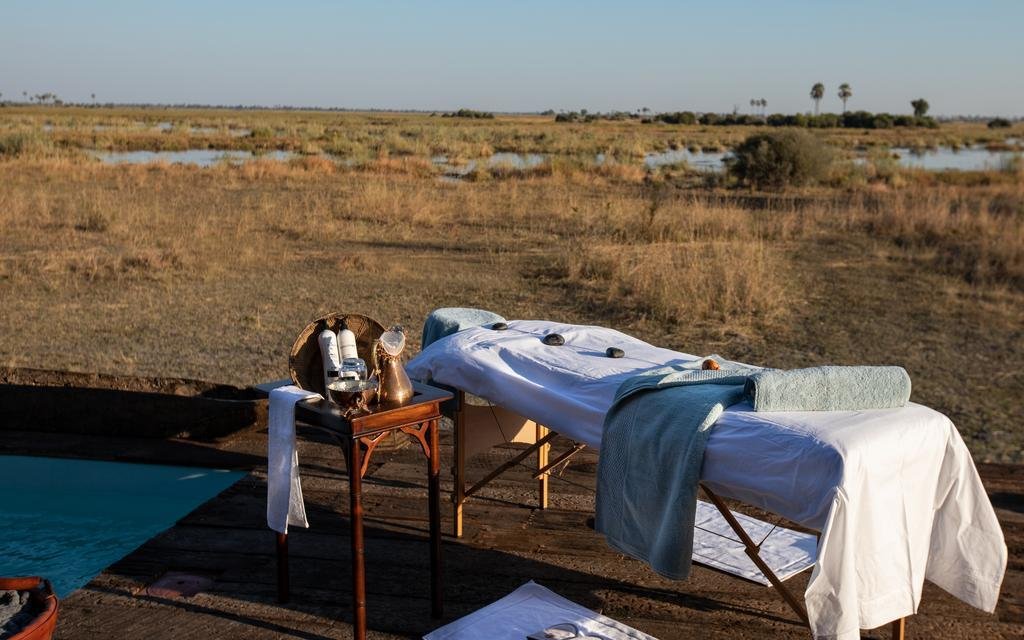
Son los campamentos Relais & Châteaux. Suites amplias (100 m² en Zarafa, 242 m² en Duba Plains), piscina privada de inmersión en cada habitación, bañera de cobre, ducha interior y exterior, aire acondicionado ecológico sobre la cama, minibar personalizado, equipo fotográfico profesional Canon en cada suite (cuerpo + teleobjetivo 100-400 mm + gran angular), bodega de vinos curada por los Joubert, cocina interactiva y spa.
En Botswana son cuatro: Zarafa Camp, Selinda Camp, Duba Plains Camp y Sitatunga Private Island. Cada uno tiene además una suite familiar de dos dormitorios que funciona como campamento privado dentro del campamento: guía propio, vehículo propio, chef propio.
Explorers Collection: lo esencial, sin concesiones
Tiendas de campaña tipo Selous o estilo años 20, levantadas sobre plataformas de madera. No hay bañera, no hay secador de pelo, no hay spa. Pero hay piscina, WiFi, caja fuerte, ventilador (aire acondicionado solo en Duba Explorers), tres comidas diarias con bebidas premium incluidas, y las mismas guías, los mismos vehículos y el mismo acceso al territorio que en los Réserve. Lo que cambia es la envolvente; lo que no cambia es el safari.
Son tres: Selinda Explorers Camp, Okavango Explorers Camp y Duba Explorers Camp.
La diferencia de precio entre ambas líneas es significativa. Pero la calidad del avistamiento — que depende de la ubicación, la densidad de fauna y la competencia de los guías — es idéntica.
Los siete campamentos de Botswana
Zarafa Camp & The Dhow Suite at Zarafa — Selinda Reserve
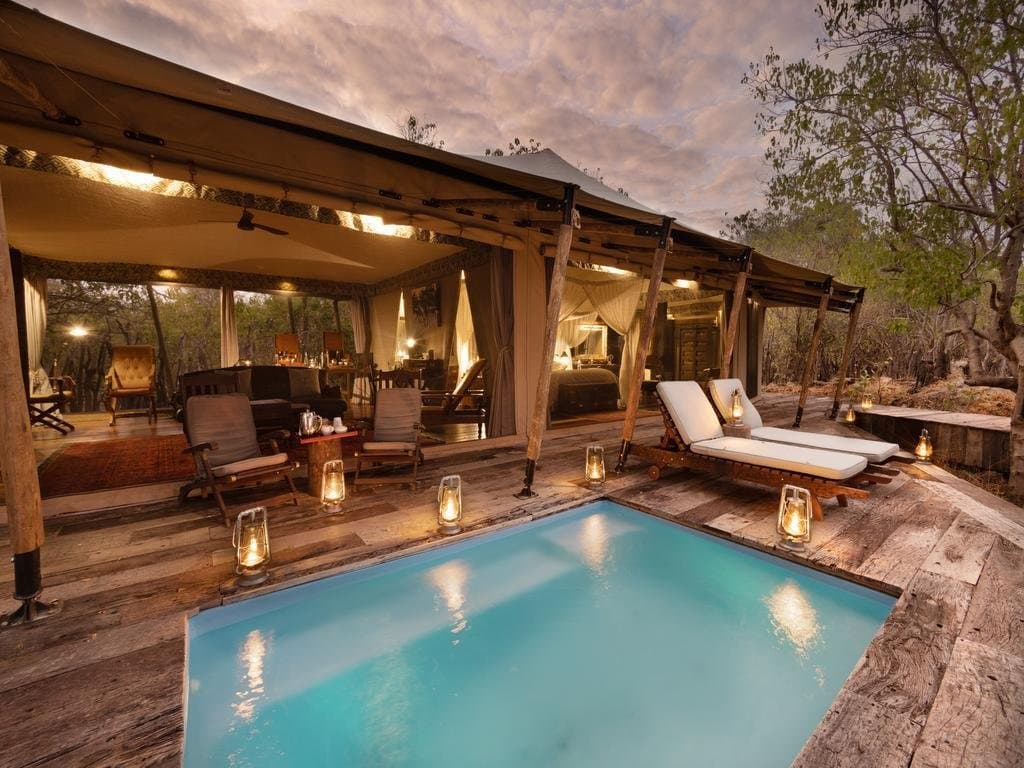
Capacidad: 4 suites (máx. 8 huéspedes) + Dhow Suite de 2 dormitorios (máx. 4 adultos o 2 adultos + 3 niños)
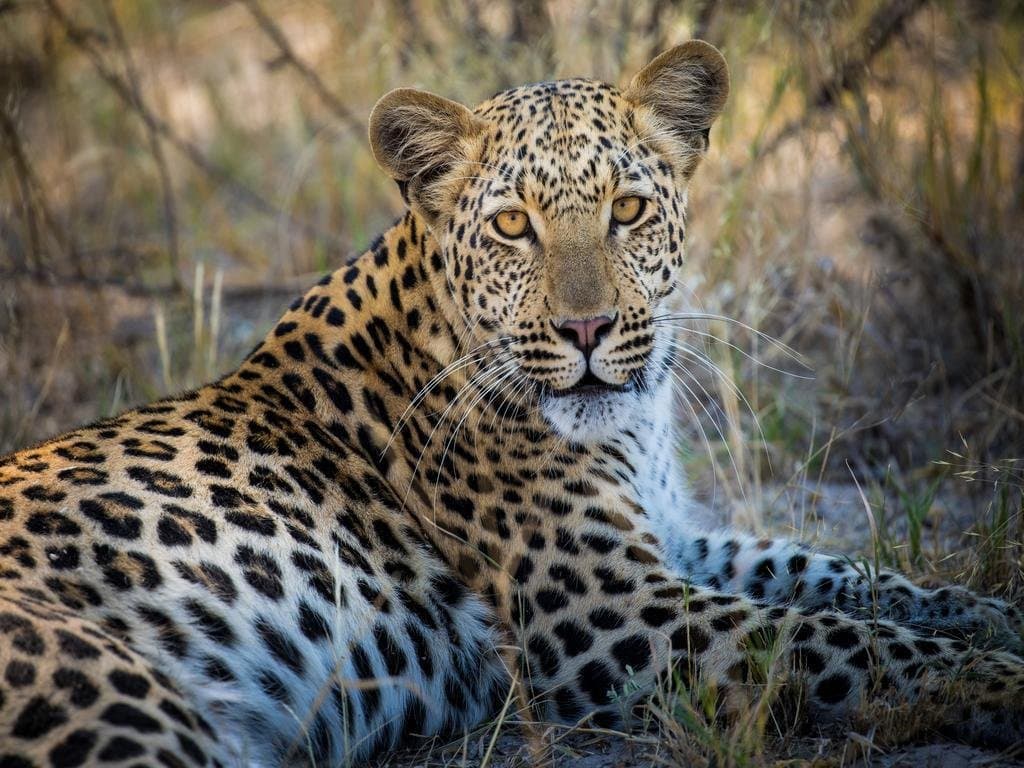
Zarafa domina la laguna Zibadianja, origen del famoso canal Savute. En temporada seca, cientos de búfalos y elefantes se congregan frente al campamento para beber. Leopardos, leones, la manada de licaones de Selinda y, con suerte, guepardos completan el cuadro de depredadores.
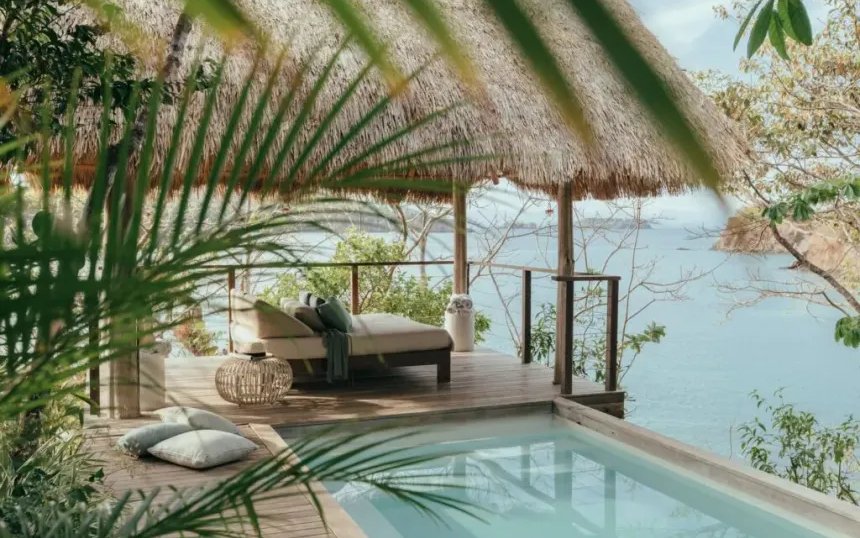
Cada suite tiene 100 m² bajo lona, construida sobre teca reciclada de más de cien años (antiguas traviesas de ferrocarril). Piscina privada de inmersión con vistas a la laguna. Chimenea de gas — Zarafa es el único campamento de Great Plains en Botswana que la tiene, útil en las noches de invierno cuando la temperatura cae por debajo de los 5 °C.
El pontón H.E.S. Zib es una firma de Zarafa: una plataforma flotante de 25 m² con sofás, barra y zona de comedor donde se sirven brunchs y sundowners mientras hipopótamos resuellan alrededor. Para los fotógrafos, hay un barco diseñado con montajes fijos de cámara y asientos giratorios.
La Dhow Suite merece mención aparte. Con 210 m², es una de las mayores suites bajo lona de África. Se vende en régimen de uso exclusivo: guía privado, vehículo privado, comedor privado. La puerta de entrada es una pieza de madera tallada de Lamu. Dos dormitorios con baños en suite, cada uno con bañera de cobre y ducha interior y exterior.
Dato práctico: Zarafa funciona con una granja solar de 170 paneles. La bodega tiene cientos de botellas seleccionadas por los Joubert, priorizando productores con compromiso social o ambiental. El spa se ubica entre la suite 4 y la Dhow Suite.
Selinda Camp & Selinda Suite — Selinda Reserve
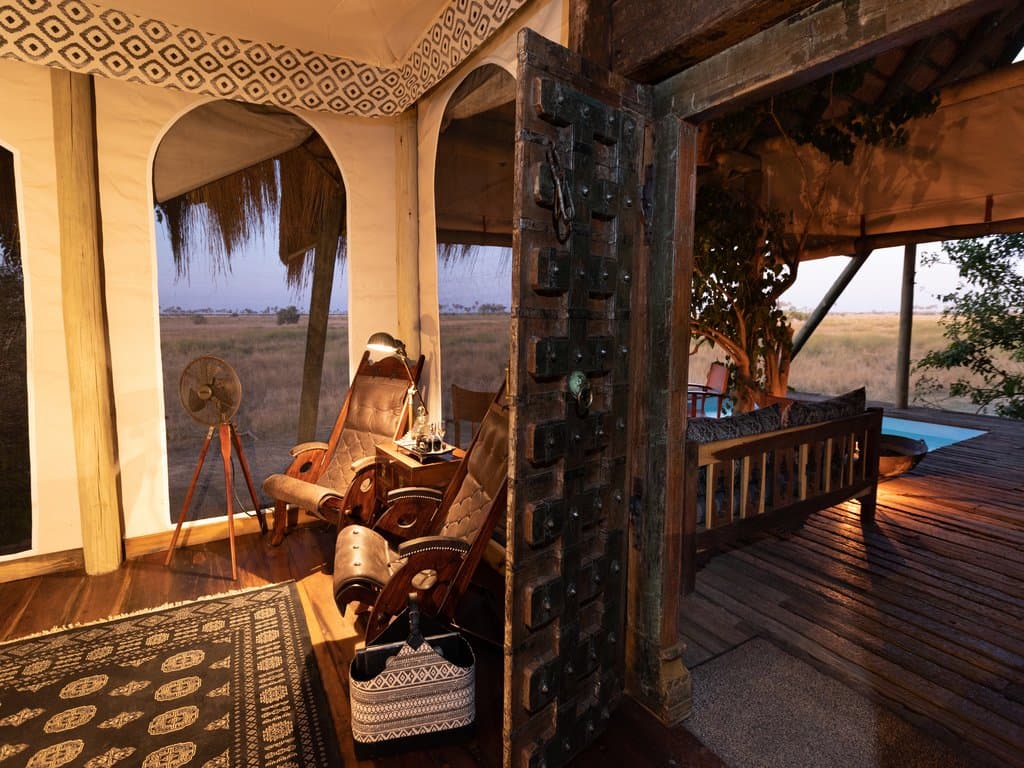
Capacidad: 3 suites (máx. 6 huéspedes) + Selinda Suite de 2 dormitorios
Si Zarafa mira a la laguna, Selinda Camp mira al Selinda Spillway donde desemboca en el río Linyanti. Es un campamento más pequeño, más íntimo, con solo tres suites en el campamento principal. La arquitectura rinde homenaje a tres culturas — europea, mokololo y bayei — y el diseño gira en torno a cuatro elementos: agua, aire, tierra y fuego.
Cada suite tiene piscina privada, bodega con temperatura controlada (walk-in), y el mismo equipo fotográfico Canon que Zarafa. La Selinda Suite funciona de forma independiente con guía y vehículo propios.
El Selinda Spillway desbordó históricamente cada invierno, aunque ahora lo hace de forma irregular. Cuando lo hace, abre la posibilidad de paseos en barco — una experiencia que cambia completamente el carácter del safari. La reserva alberga la manada de licaones de Selinda y la Selinda Lion Pride, documentada en el film de National Geographic Birth of a Pride.
Dato práctico: webcam de vida salvaje en directo 24h disponible en la web de Great Plains. Accesibilidad parcial para personas con movilidad reducida: la suite más cercana al área principal tiene rampa.
Duba Plains Camp & Duba Plains Suite — Duba Concession
Capacidad: 5 suites (máx. 10 huéspedes) + Duba Plains Suite de 2 dormitorios
Es el campamento insignia. El que los Joubert eligieron como residencia personal. Se asienta sobre una isla en el corazón del Delta del Okavango, rodeado de llanuras inundables permanentes, canales de papiro y bosques de mopane. El acceso es solo por avioneta ligera (40 minutos desde Maun) y luego 5 minutos en coche.
Duba Plains es el único operador en su concesión. Esto significa exclusividad total sobre el territorio: sin otros vehículos, sin otros campamentos compitiendo por los avistamientos. La concesión es conocida por sus interacciones depredador-presa de alto nivel — los documentales de los Joubert sobre leones cazando búfalos en las llanuras inundadas se filmaron aquí. También se avistan regularmente especies infrecuentes del Kalahari como el aardvark (cerdo hormiguero) y el pangolín.
Las suites, cada una de 242 m², están elevadas sobre traviesas recicladas con vistas panorámicas de la llanura. Cocina interactiva, bodega, centro multimedia. El barco de fondo plano tiene montajes fijos de cámara diseñados específicamente para fotografía desde el agua.
Dato práctico: es el campamento de Botswana más adaptado para personas con movilidad reducida. Pasarelas elevadas de madera conectan todas las áreas, y la suite más cercana tiene rampa completa.
Sitatunga Private Island — Sitatunga Private Reserve
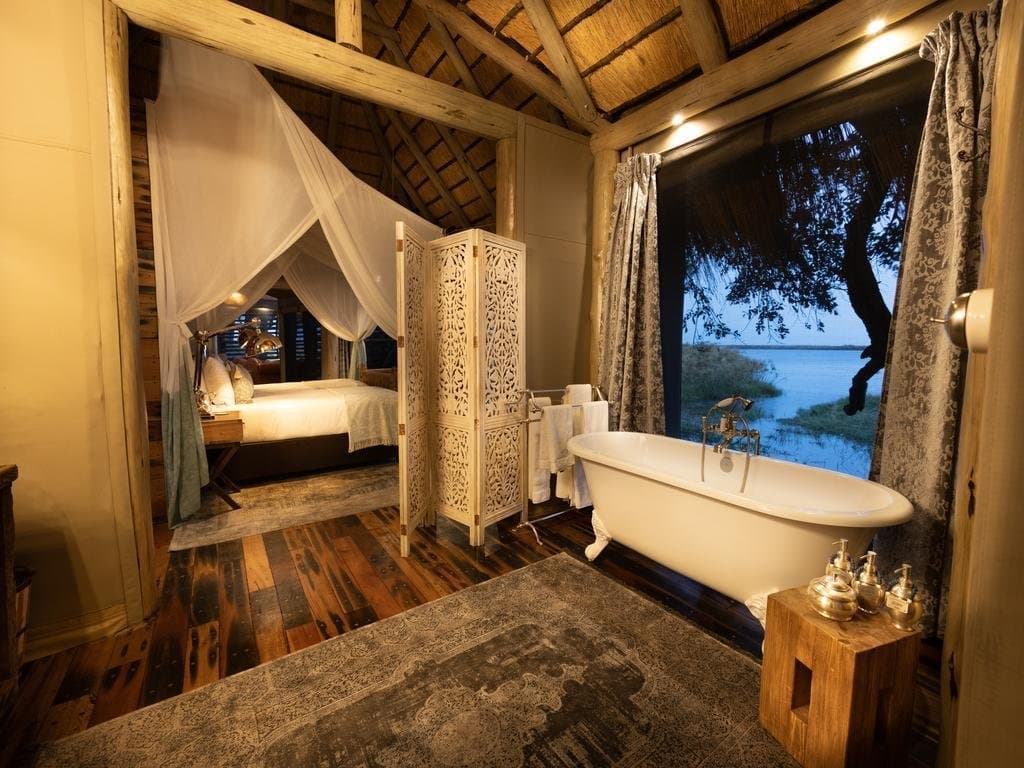
Capacidad: 2 suites (máx. 4 huéspedes) + Sitatunga Suite de 2 dormitorios (máx. 4 adultos)
El más reciente de los campamentos (abierto en julio de 2023) y probablemente el más singular. Sitatunga es una isla privada en lo profundo del Delta, accesible únicamente por helicóptero (10 minutos desde Duba Plains) o lancha motorizada. No hay game drives aquí — no hay carreteras. La actividad principal es el agua: paseos en lancha, mokoro y caminatas guiadas por la isla.
El diseño es obra de Dereck Joubert, inspirado en las cestas de pesca de los bayei, los pescadores indígenas que han habitado esta zona durante más de 200 años. Las suites están dentro de estructuras de bambú en forma de embudo que evocan esas cestas, elevadas sobre la copa de los árboles. La paleta de colores replica lo que se ve mirando al Delta: verdes brumosos y maderas blanqueadas por el sol.
Toda la madera es reciclada o recuperada. No se taló un solo árbol nuevo. Se eliminó el plástico casi por completo del proceso de construcción.
Es el lugar donde se avistan sitatungas (Tragelaphus spekii), el esquivo antílope acuático que da nombre al campamento y que es extremadamente difícil de ver en cualquier otro contexto de safari.
Dato práctico: riesgo de malaria medio (más alto que en los otros campamentos, que reportan riesgo mínimo). Estancia recomendada: 2-3 noches, idealmente combinado con Duba Plains.
Selinda Explorers Camp — Selinda Reserve
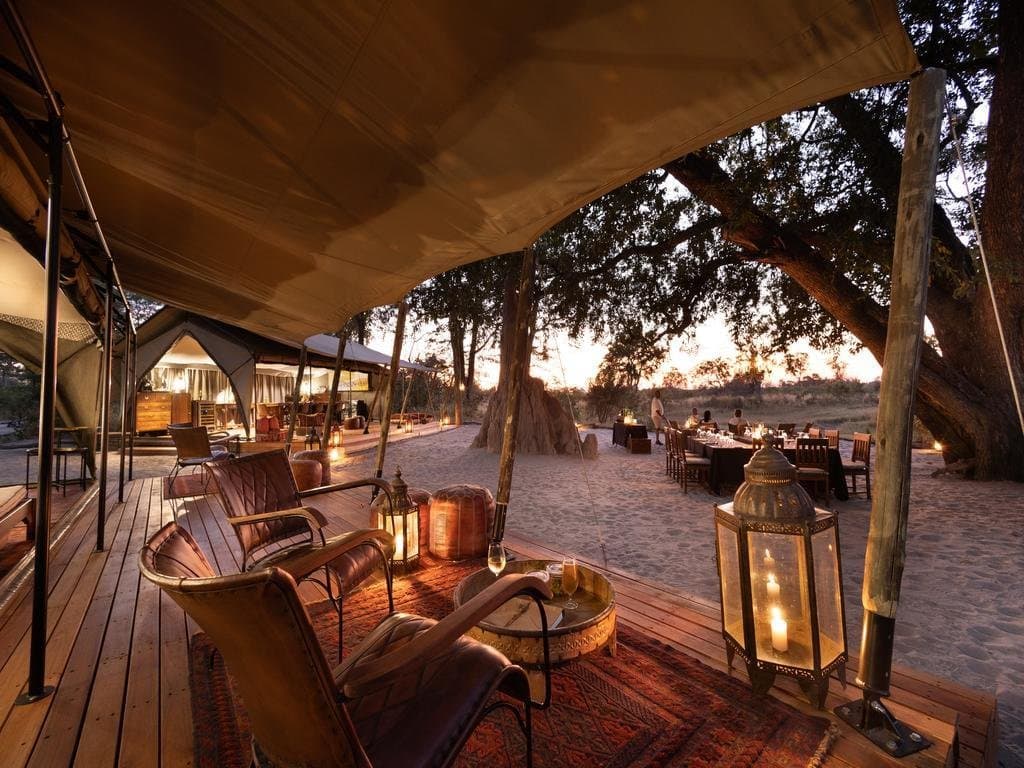
Capacidad: 3 tiendas + 1 tienda familiar de 2 dormitorios (máx. 10 huéspedes)
Ubicado a orillas del Selinda Spillway, a una hora en coche de Selinda Camp (su hermano mayor Réserve). Tiendas tipo campaña al estilo de los primeros exploradores de África Oriental, con mobiliario de madera reciclada y textiles de Zanzíbar. El área común es de estilo beduino, con salón y comedor separados.
Es el único Explorers con tienda familiar en Botswana — dos dormitorios, cada uno con baño propio. Esto lo convierte en la opción más lógica para familias que quieren la experiencia Explorers sin renunciar al espacio.
La Selinda Reserve en septiembre puede concentrar hasta 9.000 elefantes. El campamento está en zona de alta densidad de depredadores: leones, leopardos, guepardos y licaones son avistamientos habituales. Antílopes raros como el antílope ruano, el sable y el eland se suman a la lista.
Actividades: game drives diurnos y nocturnos, caminatas guiadas con guías armados, piragüismo en el Spillway (cuando hay crecida invernal), pesca con devolución (marzo-diciembre).
Okavango Explorers Camp — Selinda Reserve
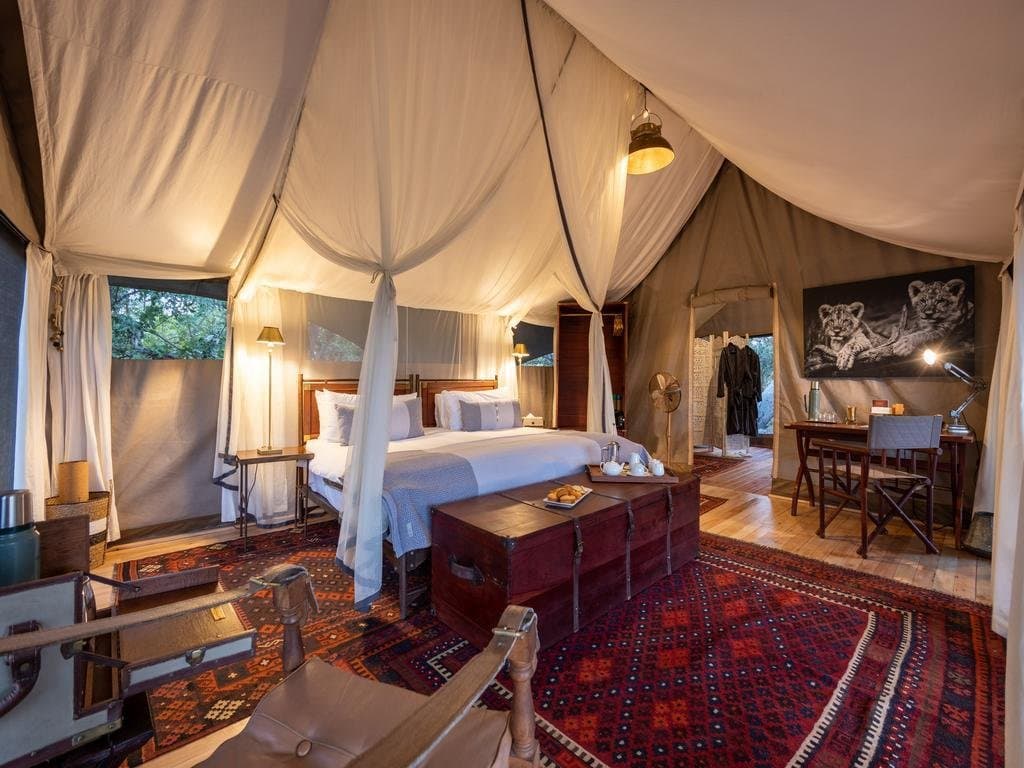
Capacidad: 6 tiendas (máx. 12 huéspedes)
El más grande de los Explorers y el más remoto. Se sitúa en el suroeste de la Selinda Reserve, justo donde el sistema fluvial del Delta del Okavango se encuentra con el Selinda Spillway — una confluencia de dos ecosistemas icónicos en un solo punto.
El diseño evoca los safaris de los años 20: tiendas de lona sobre plataformas de madera, estética de expedición con comodidades modernas. No tiene tienda familiar (solo configuraciones doble o twin), pero admite triples bajo petición y es ideal para grupos de amigos o parejas que quieran reservar el campamento entero para una experiencia privada.
Actividades: game drives, caminatas guiadas, piragüismo en los canales del Spillway (cuando hay agua), pesca. Los drives nocturnos son especialmente productivos aquí para fauna nocturna: hienas, leones cazando, y mamíferos poco conocidos.
Dato práctico: a solo 5 minutos en coche de su pista de aterrizaje. Programa Young Explorers disponible.
Duba Explorers Camp — Duba Concession
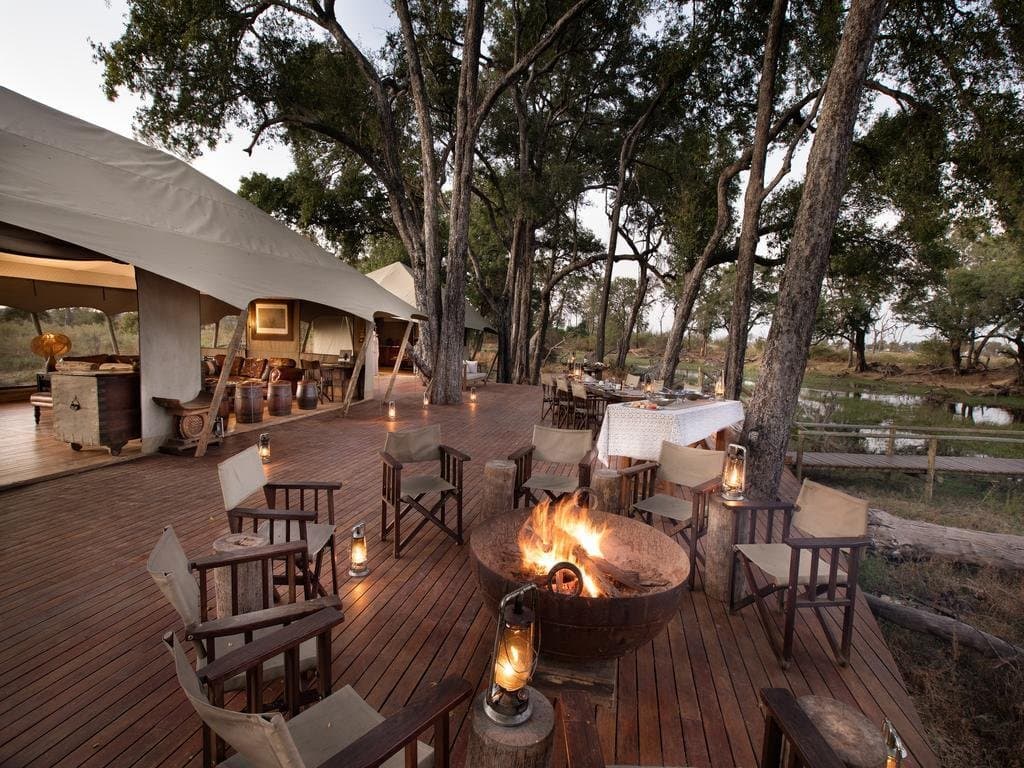
Capacidad: 5 tiendas (máx. 10 huéspedes)
El Explorers del Delta. Situado en la esquina noreste de la concesión de Duba, sobre una isla rodeada de llanuras inundables permanentes, accesible solo por puentes de troncos. Cuando sube la crecida, el campamento queda literalmente sobre el agua. Los hipopótamos se escuchan desde la tienda.
Es el más completo de los tres Explorers: tiene boutique, equipo de ejercicio en las tiendas, aire acondicionado ecológico sobre la cama (los otros dos Explorers no lo tienen) y una piscina que se ha convertido en uno de los elementos más fotografiados de la colección.
Al compartir concesión con Duba Plains Camp, accede al mismo territorio de fauna: leones, leopardos, búfalos, más de 400 especies de aves. Las actividades combinan drives, mokoro, paseos en barco (según nivel de agua) y caminatas guiadas.
Dato práctico: acceso por avioneta a la pista de Duba Plains + 5 min en helicóptero. Todo incluido con bebidas premium.
Conservación con cifras: los proyectos detrás de los campamentos
Lo que diferencia a Great Plains de otros operadores de lujo no es solo el nivel de las suites. Es lo que hacen con el margen.
Rhinos Without Borders es su proyecto más conocido. Iniciado junto a andBeyond, consistió en trasladar rinocerontes blancos desde zonas de alto riesgo de caza furtiva en Sudáfrica a santuarios protegidos en Botswana. El resultado: 87 rinocerontes reubicados con éxito y más de 60 crías nacidas en su nuevo hábitat. El proyecto ahora se centra en monitorización y protección a largo plazo, ya bajo gestión exclusiva de Great Plains.
Las Female Rangers son unidades de vigilancia íntegramente femeninas que patrullan las concesiones de Great Plains en Botswana y Zimbabue. Recogen datos, actúan como sistema de detección temprana contra la caza furtiva, y rompen estereotipos de género en comunidades rurales. El primer equipo comenzó a entrenarse en 2022.
Las Solar Mamas son mujeres de aldeas que rodean el Delta del Okavango que fueron enviadas a la India (Barefoot College) durante seis meses para formarse en instalación y mantenimiento de sistemas solares domésticos. Volvieron capacitadas para electrificar hogares en una región donde solo el 35% de las viviendas tiene electricidad.
La Great Plains Earth Academy ofrece formación profesional con enfoque en conservación y turismo para jóvenes y adultos del Delta del Okavango. Los Student Conservation Camps — campamentos educativos para niños de comunidades locales — se han celebrado durante más de diez años, muchos de ellos en Selinda Explorers Camp.
Familias en Great Plains: el programa Young Explorers
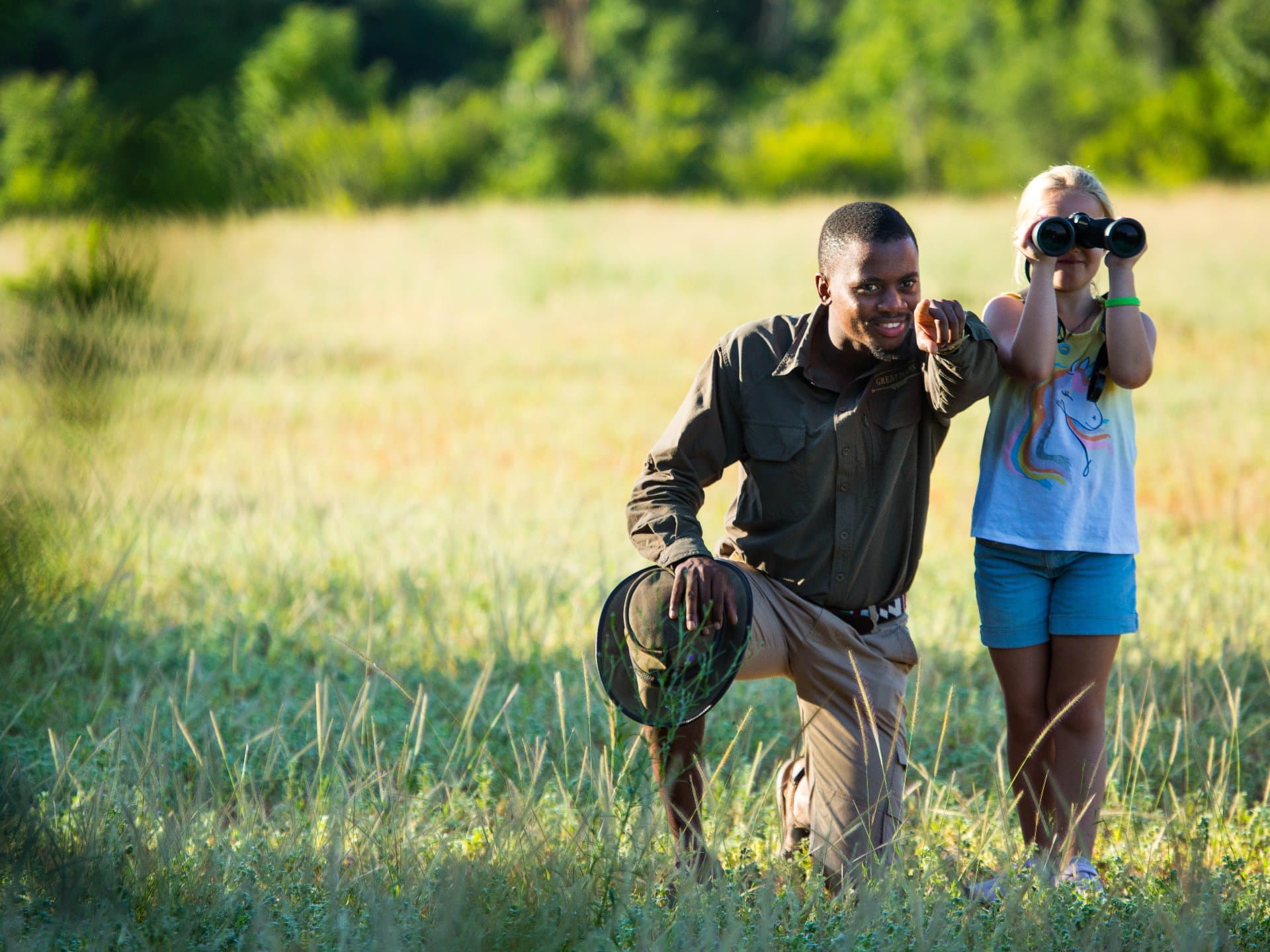
Todos los campamentos de Botswana aceptan niños a partir de 6 años. Las actividades acuáticas en mokoro y canoa requieren un mínimo de 8 años.
El programa Young Explorers está diseñado para niños de 8 a 16 años e incluye: rastreo de huellas con guías expertos, retos de identificación de aves (el "111 Bird Challenge"), clases de fotografía, observación astronómica (espectacular en invierno), cocina con los chefs del campamento (incluida fabricación de pizza en Zarafa y pasta fresca), cestería tradicional en Duba Plains, juegos de mesa africanos (Morabaraba) y partidos de fútbol improvisados con el personal. Los niños reciben un pack de explorador con cuaderno de actividades al llegar y un certificado Young Explorers al marcharse.
Para familias que buscan espacio propio, las opciones son: Selinda Explorers (única tienda familiar en la línea Explorers), o cualquiera de las suites de dos dormitorios de la colección Réserve (Dhow Suite, Selinda Suite, Duba Plains Suite, Sitatunga Suite), que funcionan como campamento privado con guía, vehículo y chef dedicados.
Importante: los campamentos no tienen vallas. Hay depredadores activos dentro y alrededor. Las piscinas no tienen cubierta. La supervisión de niños es responsabilidad de los padres en todo momento.
Lo que conviene saber antes de reservar
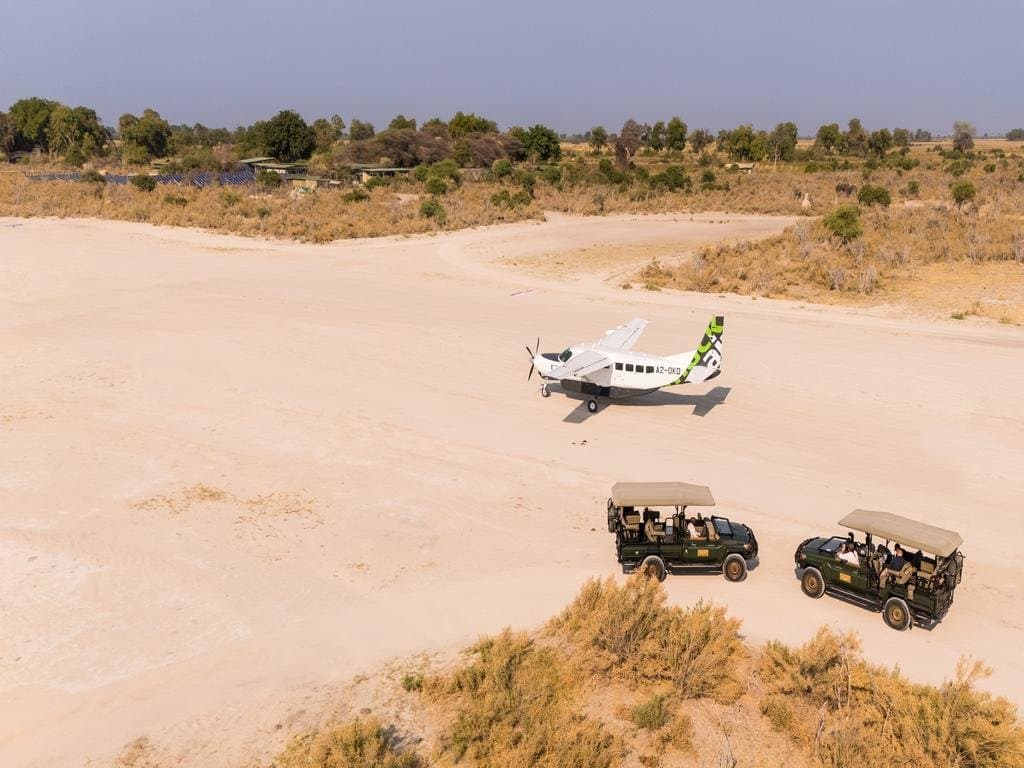
Algunos detalles prácticos que los folletos no priorizan pero que afectan a la experiencia:
Acceso: todos los campamentos de Botswana se alcanzan por avioneta ligera desde Maun (40-45 min) o Kasane (55 min-1h25). No hay carreteras de acceso. Las pistas de aterrizaje son de tierra, de 1.000 metros, y solo admiten aeronaves ligeras. Sitatunga requiere además helicóptero o lancha desde Duba Plains.
Conectividad: WiFi disponible en todas las tiendas y suites. No hay señal de móvil en ningún campamento. Para quienes necesiten desconectar, esto es una ventaja. Para quienes necesiten estar localizables, conviene saberlo antes.
Malaria: riesgo mínimo en la mayoría de campamentos (zonas remotas con baja incidencia). Sitatunga reporta riesgo medio. La profilaxis antimalárica no es obligatoria pero sí recomendada si existe preocupación.
Pagos en campo: Visa y MasterCard para extras y boutique. No aceptan American Express ni Diners. Propinas al personal preferiblemente en efectivo (pula, dólares, euros o libras).
Seguro: obligatorio contar con seguro médico completo y cobertura de evacuación de emergencia. El centro médico más cercano está en Maun; el siguiente con capacidad seria, en Johannesburgo.
Sostenibilidad: todos los campamentos funcionan con energía solar (con generador de respaldo). Zarafa opera con 170 paneles solares. Se ha eliminado el plástico de un solo uso. La madera es reciclada. Duba Plains usa traviesas de ferrocarril centenarias. Sitatunga se construyó sin talar un solo árbol nuevo.
Great Plains Conservation es uno de nuestros partners en Botswana. Si estás valorando un safari en el Okavango Delta o la Selinda Reserve — para una luna de miel, un viaje en familia o una inmersión fotográfica seria —, estaremos encantados de coordinar el itinerario y asesorarte sobre qué combinación de campamentos encaja con lo que buscas.