
7 resorts en Maldivas con los mejores arrecifes para hacer snorkel
No todos los resorts en Maldivas ofrecen la misma experiencia bajo el agua. La distancia al arrecife, la salud del coral, la variedad de vida marina y el nivel de conservación detrás de cada propiedad varían enormemente de una isla a otra. Elegir bien el resort significa, en muchos casos, la diferencia entre hacer snorkel todos los días desde tu villa o depender de excursiones en barco que el mal tiempo puede cancelar.
Esta selección reúne siete propiedades donde el arrecife no es un complemento, sino el centro de la experiencia. Todas tienen programas de conservación activos, biólogos marinos residentes y acceso directo al coral sin necesidad de subirse a un dhoni.
Por qué el arrecife del resort importa más de lo que crees
Muchos resorts en Maldivas dependen de salidas en barco para que sus huéspedes hagan snorkel. Funciona cuando el mar está en calma y hay plazas disponibles, pero en temporada alta las excursiones se llenan rápido, y con oleaje o viento las salidas se cancelan sin alternativa.
Un buen house reef — el arrecife que rodea la propia isla del resort — cambia completamente la ecuación. Permite entrar al agua cuando quieras, sin horarios ni logística, y hace que estancias cortas de cuatro o cinco noches rindan mucho más. Para familias con niños es especialmente valioso: los padres pueden turnarse para hacer snorkel mientras el otro se queda en la villa, algo imposible si cada salida exige coordinar un barco.
Pero no todos los house reefs son iguales. La profundidad, la distancia desde la orilla hasta el borde del arrecife, las corrientes y, sobre todo, la salud real del coral después de los episodios de blanqueamiento de los últimos años determinan si la experiencia será memorable o decepcionante.
Qué hace que un house reef sea realmente bueno
Antes de entrar en propiedades concretas, estos son los criterios que marcan la diferencia:
Accesibilidad real. ¿Se accede desde la playa, desde una escalera en el water bar o hay que nadar 200 metros en laguna arenosa antes de llegar al coral? La distancia importa, especialmente para nadadores menos experimentados.
Cobertura y salud del coral. Después del blanqueamiento masivo de 2016 y los episodios posteriores, no todos los arrecifes se han recuperado igual. Los resorts con programas activos de restauración — estructuras de coral, nurseries, eliminación de macroalgas — suelen tener arrecifes en mejor estado.
Diversidad de vida marina. Un arrecife sano atrae residentes permanentes: tortugas, tiburones de arrecife, rayas, morenas, nudibranquios. Si el resort puede decirte cuántas tortugas tiene identificadas, es buena señal.
Biólogo marino residente. No es un lujo decorativo. Un biólogo que guía snorkels, explica el ecosistema y dirige investigación activa transforma una actividad turística en algo con profundidad real.
Programas de conservación verificables. Coral planting, bases de datos de identificación de tortugas, colaboraciones con instituciones científicas. Lo que diferencia la conservación real del greenwashing.
7 resorts con los mejores arrecifes en Maldivas
Anantara Kihavah — Atolón Baa
El atolón Baa es Reserva de la Biosfera de la UNESCO, lo que da una idea del contexto marino en el que se sitúa esta propiedad. Anantara Kihavah ha invertido en estudios detallados de su arrecife para evaluar la salud del ecosistema y tomar decisiones de gestión basadas en datos reales.
Los huéspedes pueden participar en limpiezas del arrecife dos veces por semana y en un programa de adopción de corales. Un detalle que dice mucho sobre el compromiso del resort: igualan cada dólar que un huésped dona para conservación marina. No es un gesto simbólico, es política de la propiedad.
El house reef tiene calificación excepcional y se accede directamente desde la isla.
Baros — Atolón North Malé
Baros lleva décadas en North Malé y su arrecife es uno de los mejor documentados del país: más de 50 especies de coral, 52 familias de peces y unas 20 tortugas carey identificadas, además de erizos de mar lápiz, una especie poco común en la zona.
El resort ofrece snorkel educativo guiado, programas interactivos de propagación de corales y presentaciones sobre el medio marino. Ambra Dugaria, bióloga marina e instructora de buceo con más de 5.500 inmersiones y formación en Oceanografía, lidera buena parte de estas actividades. Uno de los encuentros favoritos de los huéspedes es con Finny, una hembra de tiburón de puntas negras que sobrevivió a la pérdida de su aleta dorsal siendo juvenil y ha tenido dos camadas de crías — un caso excepcional de resiliencia que Ambra utiliza para explicar la biología de los tiburones de arrecife.
La ventaja logística de Baros es su proximidad a Malé: solo 25 minutos en lancha rápida. Para estancias cortas o viajeros que prefieren evitar el hidroavión, es una de las opciones más accesibles con arrecife de alto nivel.
COMO Cocoa Island — Atolón South Malé
COMO Cocoa Island ha puesto en marcha un proyecto de restauración de coral que utiliza estructuras artificiales para fomentar la regeneración. Los biólogos marinos residentes realizan mantenimiento periódico de estas estructuras — eliminan macroalgas, supervisan el crecimiento de los fragmentos y documentan la evolución del arrecife.
Ilaria Zuccaro, bióloga marina del resort, lleva años guiando actividades de snorkel y transmitiendo a los huéspedes algo que suele pasar desapercibido: que los corales, esos organismos que muchos confunden con rocas, son los que sostienen la mayor parte de la vida marina que depende de ellos. Es el tipo de perspectiva que cambia cómo miras un arrecife.
El house reef tiene calificación de gran nivel y el resort mantiene la filosofía minimalista y cuidada que caracteriza a COMO en todas sus propiedades.
Baglioni — Atolón Dhaalu
Baglioni es la opción italiana de esta lista — y también una de las más infravaloradas en cuanto a su arrecife. La isla de Maagau, en el atolón Dhaalu, tiene un house reef accesible desde la playa con el borde del arrecife a unos 20 metros de la orilla. Sin escaleras, sin barco, sin complicaciones.
El Maagau Dive Centre, dirigido por la italiana Alessia Pagani, ofrece desde PADI Bubblemaker para niños de 8 años hasta inmersiones avanzadas. Riccardo y Carolina, instructores de buceo, insisten en algo que debería ser obvio pero no siempre lo es: que el buceo responsable empieza por entender el arrecife antes de entrar en él. Cuando un buceador comprende el ecosistema, pasa de ser una amenaza potencial a formar parte de su protección.
Para familias, Baglioni tiene la ventaja añadida de ser all-inclusive con un kids club supervisado, lo que permite combinar jornadas de snorkel con días de descanso sin preocuparse por la logística.
Park Hyatt Hadahaa — Atolón Gaafu Alifu
Park Hyatt Hadahaa opera bajo una filosofía de "isla viva" centrada en hospitalidad regenerativa. El objetivo no es solo minimizar el impacto, sino restaurar activamente los ecosistemas de la isla y su entorno marino.
El resort cuenta con un Marine Lab, el Hadahaa Ocean Lab y un programa de seguimiento a largo plazo de la salud del arrecife que incluye investigación sobre la relación entre cambio climático y degradación coralina. Azrin Shukor, bióloga marina residente, dirige charlas, sesiones en el Ocean Lab y observaciones de plancton con una misión clara: inspirar a las nuevas generaciones a proteger el océano. Como ella misma dice, no se entiende realmente el océano hasta que se pasa tiempo con él — y cuando eso ocurre, protegerlo deja de ser una obligación profesional y se convierte en algo personal.
El arrecife tiene calificación excepcional. El atolón Gaafu Alifu, en el sur profundo de Maldivas, es uno de los menos desarrollados turísticamente, lo que se traduce en arrecifes menos presionados.
The Halcyon Private Isles — Atolón Gaafu Alifu
The Halcyon es el resort más nuevo de esta lista — abrió en 2025 como parte de la colección Autograph de Marriott — y ocupa la misma isla que antes albergó Raffles Meradhoo, con un arrecife que los visitantes recurrentes consideran uno de los mejor conservados de Maldivas.
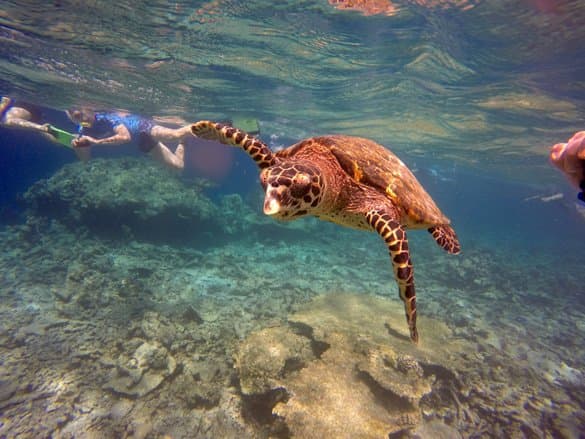
Solo 38 villas repartidas en dos islas privadas. El arrecife rodea ambas islas y se accede directamente desde las escaleras de las villas overwater. El resort tiene 25 tortugas residentes identificadas y un biólogo marino residente que guía snorkels, coordina excursiones de observación de tortugas y dirige programas de coral planting junto con talleres de biología marina para niños.
The Muraka, el centro de biología marina y sostenibilidad, funciona como laboratorio vivo dedicado a conservación, educación y exploración oceánica. Los huéspedes que han repetido visita bajo distintas marcas de gestión coinciden en lo mismo: el arrecife sigue siendo espectacular, con avistamientos frecuentes de delfines, tiburones, tortugas y rayas manta.
Six Senses Laamu — Atolón Laamu
Six Senses Laamu es el único resort operativo en todo el atolón Laamu, lo que significa arrecifes sin presión turística y sitios de buceo prácticamente privados. Es, probablemente, la propiedad de esta lista con el argumento más sólido en conservación marina.
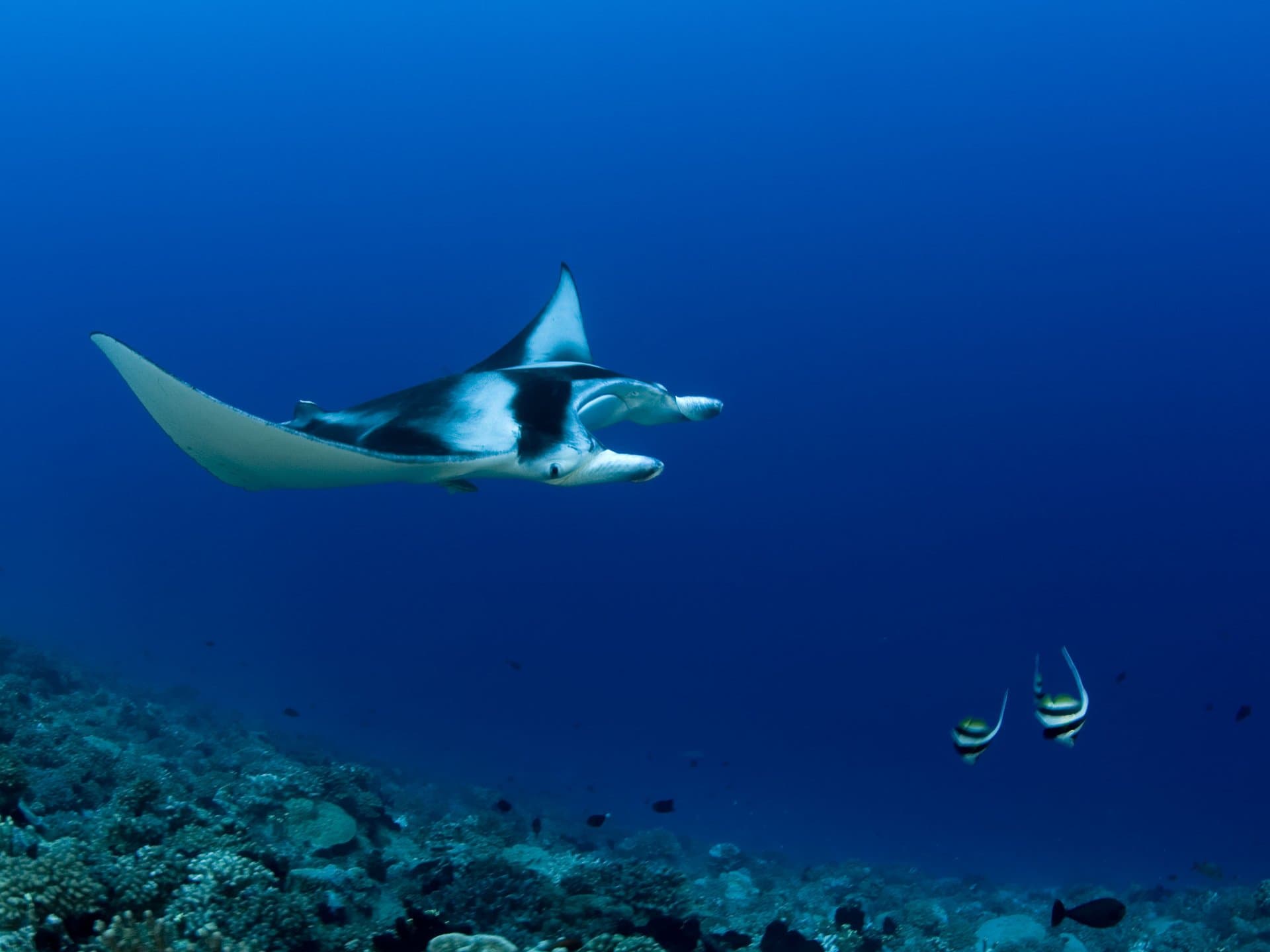
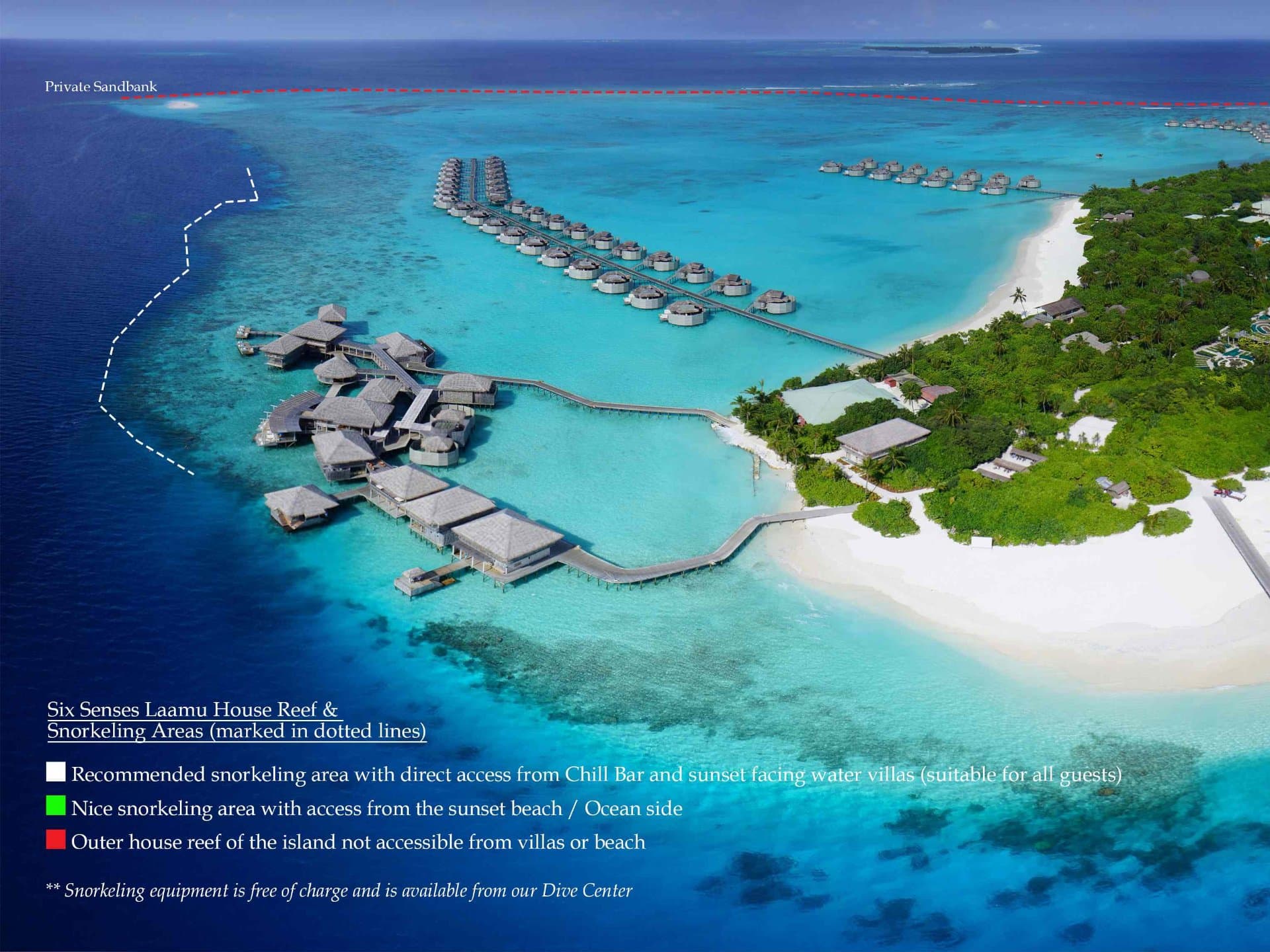
El house reef es accesible desde el jetty principal o desde la escalera del Chill Bar, y las reseñas de buceadores experimentados lo sitúan consistentemente entre los más sanos de todo el archipiélago. Coral duro en buen estado, tiburones de arrecife, tortugas verdes y carey, rayas águila, escuelas de peces y, en temporada, mantas en Manta Point — una estación de limpieza a solo cinco minutos en barco.
Lo que distingue a Six Senses Laamu es el MUI (Maldives Underwater Initiative), su programa de ciencia marina que incluye restauración de arrecifes, protección de praderas de seagrass — Six Senses fue el primer resort en Maldivas en proteger activamente su seagrass —, una base de datos de identificación de tortugas en colaboración con el Olive Ridley Project y cursos PADI especializados en mantas y tiburones. El centro de buceo tiene el PADI Green Star Award desde su apertura.
Para familias, el programa Junior Marine Biology convierte a los niños en pequeños científicos del océano. Y para buceadores, el atolón Laamu ofrece lo que muchos veteranos de Maldivas buscan: sitios sin masificar donde el barco de inmersión suele estar solo.
Cómo elegir según tu perfil de viajero
Si buscas acceso fácil y estancia corta: Baros (25 min desde Malé, arrecife excelente, sin hidroavión).
Si viajas en familia con niños: Baglioni (all-inclusive, kids club, reef a 20m de la playa, PADI Bubblemaker desde 8 años) o Six Senses Laamu (programa de biología marina junior, mucho que ver sin barco).
Si eres buceador experimentado: Six Senses Laamu (atolón sin masificar, canales con tiburones grises y rayas águila, mantas en temporada) o Park Hyatt Hadahaa (Gaafu Alifu, arrecifes poco explorados).
Si vas en luna de miel y el snorkel es importante pero no lo único: COMO Cocoa Island (intimidad + arrecife cuidado) o The Halcyon (38 villas, privacidad extrema, arrecife excepcional).
Si te importa la conservación de verdad: Six Senses Laamu (MUI, investigación científica real, protección de seagrass) o Anantara Kihavah (Reserva de la Biosfera UNESCO, matching de donaciones).
Lo que no te cuenta la ficha del resort
Antes de reservar por el arrecife, hay preguntas que merece la pena hacer:
¿A qué distancia real está el coral desde tu villa o desde la playa? Algunos resorts tienen house reef pero la zona buena está a 10-15 minutos nadando. Eso no es lo mismo que bajar una escalera y estar sobre coral.
¿Hay corrientes? En atolones del sur (Gaafu Alifu, Laamu), las corrientes pueden ser más fuertes en los canales. Ideal para drift diving, menos cómodo para snorkelers principiantes.
¿Cuál es el estado real del coral después del blanqueamiento? Los episodios de 2016 y 2020 afectaron a todo el archipiélago, pero la recuperación ha sido desigual. Los resorts con programas activos de restauración suelen tener arrecifes en mejor forma.
¿Tienen biólogo marino residente todo el año? Algunos resorts lo ofrecen solo en temporada alta. Un biólogo permanente significa monitorización continua y snorkels guiados de otro nivel.